Archive for the ‘Horse Comfort’ Category

Options for Horse Stall Bedding

October 19, 2015

Let’s talk about options for horse stall bedding. The options for bedding in your horse stall are pretty endless. In the end you have to choose something that your horse loves and it works great with you too. Bedding should have a few characteristics in order to dub it the best bedding for both you and your horse. The number one thing is that it should be safe for your horse. Don’t try and experiment with random substances in your stall. Ensure that whatever you have in your stall is going to not harm your horse externally or internally in any way, and should also not be dusty. Whatever material you choose should be absorbent (which is kind of the whole point of stall bedding), and easily composted. Your material also needs to be readily available. If whatever material you choose can be compacted, that can immensely help when looking where to store it in the barn. Most importantly, it should be cost-effective and easy to pick manure from so that you don’t spend hours a day mucking your stalls.IMG_2206

Now that we’ve discussed the criteria for horse bedding, let’s take a look at some options.

Option #1 and most popular: Shavings.

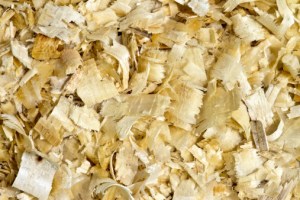
This option can be the most economical based on where you live. For example, where we are located in Upstate NY it is very easy to get ahold of wood shavings for stalls. It is cheap and you can often buy in bulk. It is easy to store and is very absorbent. The only downfall of this option is that it can be very dusty, and can even make your entire barn dusty. You should have good ventilation in a barn where loose shavings are present to give your horses fresh air. Some barns that I have gone to keep their shavings stored in a lean-to on the outside of the barn.

Option #2: Wood Pellets

I really think that this option is becoming much more popular in recent years.  Wood pellets are made of kiln dried wood and sawdust. The kiln dried wood and sawdust is compressed into a small pellet. When this pellet is in the stall and moisture hits it, it will expand to be normal sawdust again and is as absorbent as regular sawdust. This option is low in dust from the compression process and is packaged in bags, so it is easy to store; and is relatively inexpensive. The only issue with this type of bedding is that you will need to spend a little extra time to make sure that you don’t take out any pellets when you muck the stall.

Option #3: Peat Moss

Peat moss is an option that is easily available and horses seem to like it a lot because it gives them that soft bedding to lie down on. You can find this at your local hardware or garden store and a little bit goes a long way so you only need to buy a few bags. It is absorbent in the stall and virtually dust free! The only downside is that if you have a barn with many stalls, this is not your best economical option. It can get expensive for many stalls.

Option #4: Straw

Straw has been used in stalls since the beginning of time. It is often inexpensive and can be easily obtained. If it is mucked properly it stays pretty clean and composts very well. But there are many cons to straw. It is not very absorbent, (which kind of defeats the purpose of stall bedding) it requires a lot of room to store the bales, and can be very dusty. Another note to keep in mind is that some horses do try and eat this. You will need to keep an eye on what horses eat this bedding and possibly change their diet based on that.

No matter what type of bedding you use, if you have SuperStall Horse Mattresses in your stalls you will save tremendously on bedding. Our SuperStall System needs less than an inch of bedding, which will then make mucking your stalls out much easier! If you want to save on bedding, call us today for a sample of our stall mattress!

Correct Footing for Horse Disciplines

October 12, 2015

Horse disciplines are all so diverse. There’s reining, barrel racing, jumping, grand prix jumping, dressage, endurance, polo, eventing… should I go on? Each discipline asks the horse to do different things and the horse has been trained long and hard to accomplish ever command the rider asks. With each discipline being so diverse, so should the footing for the disciplines.

When you’re a barrel racer, and trying to cut milliseconds off of your run each time, every little aspect of your ride matters.  If you’re riding on a hard ground, your horse isn’t going to be able to slide around the barrels. He’s going to have to work hard to grip the hard ground and turn faster. Now let’s say that you’re jumping your horse, performing some high grand jumps, around 5-6 feet (this is great pretending we can jump that high). If you’re jumping your horse this high and landing on a hard surface, your horse could get seriously injured from landing on a hard surface. The surfaces that you ride your horse on, makes a huge impact on how your horse feels, continues to train, and performs.

Our TruStride Footing, is designed specifically for the high jumps that we just discussed. The footing is composed of rubber, synthetic fiber, wax, and pure silica sand. The rubber works hard to create that bounce back effect that a horse needs when jumping such heights, while the fiber forms a lattice-like surface and the wax makes the footing dust free. It is also great footing for Thoroughbred Tracks, allowing race horses to spring off of the surface and forward in their race.

Our LiteStride Footing is the perfect footing for various disciplines such as dressage or hunter/jumper. LiteStride consists of synthetic fibers, wax, and pure silica sand. The fibers make the perfect surface to support your horse while training for dressage and going over smaller jumps; allowing the surface to “give” a little while still staying resilient.

The newest product of footing: Equi-Blend is our most economical option. The formula for Equi-Blend was constructed with the average barn owner in mind. We wanted a footing that everyone could afford while still staying dust free. This footing is recommended for a variety of disciplines such as dressage, Western/Pleasure, or small jumping at a low traffic barn. If you Frog Hollow (14)- Editedare doing higher jumps or it is a higher traffic barn, we would encourage you to consider our TruStride footing.
5K Ranch was developed specially for western riders. It is perfect footing for flat work, loping, cutting, and barrel racing. This is a looser footing that is only used with western pleasure. It consists of our pure silica sand and wax. It stays dust free while still allowing for the “slide” in the footing that is needed in a discipline such as reining.

No matter what discipline of horse riding you train long and hard in, we have the perfect footing for you. Send us some information about your arena and we can suggest the right footing for you and send you a sample!

What is your favorite discipline?


Barn Hacks For Your Barn

September 8, 2015

Running a barn is a lot of work. Whether you have IMG_2205a lot of help or not. It can be easier with different tips and tricks that you can use around your barn. I’ve pulled together a nice list of a few “barn hacks” to make your life at the barn easier!

  • In the summer, freeze gallon jugs of water and throw them in your outdoor water buckets to keep the water cool for your horses.
  • Put your feed and hay in a central location in your barn so that you’re not running to one end of the barn every time you have to feed someone.
  • Mount a bucket horizontal with the opening facing out where your hose is, you can wrap the hose around the bucket for organizing your hose, and the bucket serves as a perfect spot to store your nozzles, brushes and soaps for giving your horse a bath!
  • If your horse likes to drag his bedding out into the isle, install broom bristles at the opening of his stall, it will keep the bedding in.
  • The most annoying noise to me is when you drop a cross tie and it clinks against the wall, I’ve even had horses scare from this noise. To help this issue cut a tennis ball on both ends to slip the cross tie through, it won’t make any loud noises when you drop it!
  • Install a PVC pipe near an indoor or outdoor arena to hold your various whips. If it’s outside just make sure to drill a hole in the bottom so that water can get out.
  • Colored duct tape is a great way to distinguish everyone’s supplies, just tape the handles of grooming supplies. Everyone gets their own color or their own pattern.
  • Use shoe organizers in your tack room to store all of your polo wraps and boots either in the barn or in your trailer. Grab a larger clothes hanging organizer to store helmets!
  • A pool skimmer comes in handy when trying to clean out your horses water bucket, quickly use it to grab debris that’s in both your outdoor water buckets and stall buckets!
  • During the winter time, hang your bridle around your neck, inside your jacket to warm it up for your horse, they’ll greatly appreciate a warm bridle and bit!

I would love to hear any other “barn hacks” that you may have in the comments below!

Arena Footing: It’s Not Just About Feet.

April 1, 2013

Arena footing may cause injuryArena footing isn’t just about the feet—but about the horse’s entire body. Arena footing influences the entire musculoskeletal system, including bones, muscles, joints, tendons and cartilage. Choosing the right type of footing is important because some surfaces can be a potential risk factor for injuries.

  • Coffin bone fracture is a common fracture among horses who ride fast on hard surfaces. When a material, such as clay or stone dust dries out, it compacts and forms a hard surface, causing horses to move stiffly. Since materials can compact over time, adding an amendment helps reduce compaction and can provide cushioning necessary for good leg and tendon support.
  • Degenerative joint disease (DJD) can be developed due to repeated shock impact of the hoof with the ground, which can lead to progressive and severe cartilage damage. Surfaces with lower-impact resistance absorb more energy and reduce shock to the hoof and leg. Sand has a lower impact resistance, but very deep or dry sand can lead to injuries other than those caused by impact shock.

Wax-coated sand, rubber and fiber arena footing materials can help reduce the shock of contact between the hoof and the surface. To help prevent the risk of developing tendinitis, fractures and joint injuries, be sure to train on a wax-coated footing surface like TruStride® or LiteStride® by IGK Equestrian. TruStride and LiteStride not only provide a stable, flexible and resilient riding surface, but are among the best footings to prevent injuries in the arena.

How do you prevent injuries in your arena?

10 Most Popular Posts on Carolyn’s Footing and Bedding Blog

March 12, 2013

Top 10 Arena Footing and Stall BeddingOver a year ago, I wrote my first post introducing myself as part owner of IGK Equestrian.  I created this blog so I could address some of the main challenges associated with arena footing and stall bedding and share success stories from people who have used the products. I’ve covered topics ranging from dust control in arenas to tips on how to “go green” in a horse stall. Here, in reverse order, are the 10 most popular posts to date on Carolyn’s Footing and Bedding Blog.

#10: Is Your Horse Eating in Bed? This post revealed horses on restricted calorie diets were ingesting wood shavings in their stalls. Typically, wood shavings aren’t a horse’s “go-to” snack, but when on a diet, bedding can look pretty tasty!

#9: Fuming Over Stall Odor. When drainage is poor, or stalls aren’t mucked out regularly ammonia fumes and bacteria can build up. This can be irritating and harmful for both horses and humans.

#8: The Link Between Sand Footing and Lameness. A study by the University of Glasgow showed the type of arena footing, specifically sand, can be a risk factor for lameness in dressage horses.

#7: Cutting Back on Bedding. Replenishing materials and mucking out stalls can be a hassle. This post suggests using a mat system with a waterproof top cover because it helps reduce the amount of bedding and disposal costs.

#6: Is it Time to Change my Stall Mats? If you are using a lighter- weight mat, you may have to remove it once a month to re-level the stall; however, with heavier mats, this may only be a semi-annual event.

#5: Horse Stalls can “Go Green” Too! At a young age we learned the 3 R’s: Reduce, Recycle and Reuse. This popular post proposes ways to make environmentally-friendly choices when it comes to your horse’s bedding!

#4: My Names Carolyn “I’m an Arena Footing Freak!” This was my first post introducing myself as an arena footing freak! From this point on I aimed to educate my readers about both arena footing and stall bedding.

#3: Dust Control in your Arena. Dust in the arena is common, and suggestions on how to control dust is a topic we’ve returned to time and again on this blog.

#2: How to Create a Safe Foaling Stall. A lot of people are searching the Internet for ways to create a safe foaling stall. Needless to say, quite a few of them are landing on this post.

#1: Solid Rubber Mat vs. Foam Mattress…Which is Ideal for Your Stalls? This informational post compared two popular types of stall mats. If it helped you make a decision, I’d love to hear from you!

Should You Cut Back On Hay Bedding?

February 18, 2013

Reduce hay bedding with SuperStall by IGK EquestrianAre you using hay in your stalls? According to an article in The Horse, dust particles, mold spores and fibrous plant materials found in hay can cause severe respiration irritation when inhaled by horses. Together, these irritants can result in shortness of breath, coughing and other symptoms which can impact training and exercise. In addition, a recent university study shows that mature hay for bedding can be dangerous for pregnant mares in the third trimester due to fescue toxicity. Here are four safety tips for horses bedded on hay:

 1. Wet the hay: A study conducted at the University of Edinburgh suggests wetting hay before it is put in stalls can significantly reduce dust concentration. The most effective way of limiting dust is by immersing hay in water and then immediately putting it in the stall. If not done right away, the hay will dry which could allow respirable dust levels to increase.

2. Remove horses while mucking: The study concluded dust levels are higher when there is a lot of activity in the barn. Therefore, remove horses while mucking out stalls or during any other frequent activity.

3. Test mature hay for toxins: It is not uncommon for horses to eat their bedding. Tall fescues may contain high levels of the toxin ergovaline. This could cause problems for pregnant mares and their unborn foal. Ergovaline tests can cost up to $50 per sample, but it is money well spent to protect your mare.

4. Select alternative bedding: Reducing the amount of hay used for bedding can reduce the risks posed by dust irritants and/or fescue toxicity. SuperStall® Foam Mattress by IGK Equestrian features a waterproof industrial top cover which creates a “moisture tray” that allows all liquids and manure to be captured on top and easily removed. This not only results in a cleaner, drier environment but it also reduces the amount of hay and other bedding needed in the stall.

Which bedding would you choose to keep your horses safe?

Promoting Safety and Good Health in the Barn

January 15, 2013

SuperStall is healthy beddingAlthough time consuming, building or renovating a barn can be an exciting project. You’ll want to design a barn that is safe and promotes good health and well-being for both horses and people.

According to a recent article in The Horse, veterinarians suggest avoiding attaching a newly constructed barn to an indoor arena. Although this is a convenient set-up, the dust produced in the arena can be harmful for horses. Dust interferes with breathing and can also lead to Inflammatory Airway Disease or IAD, a condition that causes coughing, nasal discharge and exercise intolerance.

If this isn’t realistic, or you are renovating a barn that is already attached, than limiting the amount of hay and sand in the stall will help reduce dust. These materials not only produce dust, but can also create an uneven surface, which could cause slippage. Wood shavings should also be minimized in the stall due to the risk of ingestion, which can cause serious digestive problems, including colic.

Concrete covered with rubber provides a nonslip surface that is comfortable and gentle on the horses’ joints, and is easy to clean. Frequent cleaning is important to help protect horses from oral-fecal diseases such as Salmonella infection, which can occur when moisture is trapped underneath the mats.

When it comes to building or renovating your barn, consider SuperStall™ Memory Foam Mattress by IGK Equestrian. SuperStall is a one-piece wall-to-wall, foam mattress system that features a waterproof woven top cover. The top cover creates a “moisture tray” that allows all liquids and manure to be captured on top and easily removed with the bedding. This not only reduces the amount of bedding needed to provide comfort, but also reduces the risk of slippage and disease risk.

How do you keep your horse healthy and safe in the barn?


Sand Vs. Mattresses…Which do you and your horse prefer?

December 21, 2012

90308465When choosing a surface for your stalls, how do you decide which material is best for your horse and easiest on you? Here are some advantages and disadvantages of two common stall bedding materials: sand and mattresses.
Sand:

Advantages:

  • Sand is highly absorbent and allows good drainage.
  • The surface is soft making it one of the most forgiving bedding materials for a horse’s legs.
  • Even if the sand is wet it rarely gets slippery.
  • Sand is often one of the most affordable bedding materials.

Disadvantages:

  • Pure and newly laid sand does not compact well, creating potentially dangerous tracks and pockets.
  • Because sand does not compact well, stalls must be raked daily to assure a smooth, safe surface.
  • Sand can retain dampness in cold weather, which can be uncomfortable.
  • Sand tends to have a drying effect on horse hooves.
  • Sand mixed with other bedding material can be a hassle to clean and should be replaced frequently.
  • Horses could ingest sand which could lead to possible intestinal impaction and colic.

Mattresses:

Advantages:

  • Mattresses provide a comfortable surface.
  • Because mattresses provide a more level surface, they can reduce the risk of slippage.
  • Foam and rubber mats provide insulation for a more comfortable and warm environment during the winter.
  • Mattresses tend to have a long life with added ability to withstand continued use.
  • Horses bedded on mattresses are less likely to ingest sand or wood chips.
  • Mattresses with a waterproof top cover can reduce maintenance.

Disadvantages:

  • Foam mattresses without top covers may retain odor and moisture.
  • Mattresses can be expensive; however, many come with a warranty.

When it comes to choosing a stall surface for your horse, for the best return on investment and overall comfort, it pays to choose SuperStall® by IGK Equestrian. In addition to all the advantages listed above, SuperStall features a waterproof, woven top cover which creates a “moisture tray” that allows urine and feces to be captured on top and removed with the bedding. This helps to reduce labor, disposal efforts and cost. Best of all, SuperStall comes with a 5-year warranty.

Which bedding do you prefer? Sand or Mattresses?

Are Your Stalls Ready For Winter?

November 30, 2012

157081684With the Farmers’ Almanac calling for a colder, snowier winter for much of the United States, it’s important to make sure your horse’s bedding is winterized! Follow these steps to ensure your horse remains dry and comfortable all winter long.

1. Remove the Manure:  Don’t believe the myth that manure keeps a horse warm. No horse wants to sleep in its own droppings, regardless of the temperature. If manure is not thoroughly removed, it can freeze, leaving your horse to lie on a bed of “manure cubes.”

2. Minimize Wood Shavings: A recent study showed horses are more likely to consume wood shavings during wet, cold weather because they are both hungry and bored. Ingesting wood shavings can cause potential serious digestive problems, including colic, so be sure to keep wood shavings to a minimum in your horse’s bedding.

3. Change Bedding Materials Frequently: Stalls bedded with wood shavings, straw, sawdust and shredded newspapers absorb a lot of moisture. These materials need to be changed frequently to ensure dryness, which can be a real chore when the temperature drops below freezing.

4.  Install Foam or Rubber Mats:  Foam and rubber mats provide insulation fora more comfortable and warm environment during cold winter days and nights. SuperStall® Foam Mattress by IGK Equestrian features a waterproof, industrial top cover which creates a “moisture tray” that allows all liquids and manure to be captured on top and easily removed. This results in a cleaner, drier environment with less need for wood shavings and other bedding materials.

Consider installing SuperStall®, and both you and your horse can look forward to winter.

What are your biggest challenges when it comes to winter stall cleaning?

Is Your Horse Eating In Bed?

September 27, 2012

Cut back on bedding with SuperStallAccording to a recent university study, researchers looking at horses on restricted calorie diets found that nearly half of them were ingesting wood shavings in their stalls.

Wood shavings aren’t a horse’s “go-to” snack, but when they are put on a diet, bedding can look pretty tasty. Although all the horses in the study remained healthy, ingesting wood shavings can cause potentially serious digestive problems, including colic, and should be discouraged.

If your horse is eating his bedding, one obvious solution is to reduce the amount of bedding in the stall. The SuperStall™ Memory Foam Mattress by IGK Equestrian features a waterproof woven top cover that fits wall-to wall within the box stall, creating a “moisture tray” that allows all liquids and manure to be captured on top and easily removed with the bedding. This not only reduces the amount of bedding needed to provide comfort (or a snack), but also reduced odor, labor to muck out stalls, and disposal costs.

The SuperStall™ Top Cover is constructed of tough fabric that can be custom fit for everything from a 12’ x 12’ box stall to a 12’ x 24’ foaling stall

Have you ever caught your horse snacking in bed? What did you do?