Everyone that rides horses has probably been in a dusty indoor or outdoor arena. Like the ones where just walking into the arena kicks up dust. Whenever I work a horse or ride in an arena like this, I notice that I continue blowing dirt out of my nose for the next four hours. It got me thinking, if I’m inhaling that much dust, how much is the horse I’m working with taking in?
While doing some research I found out some really interesting information. The average adult human consumes roughly 19 liters or 5 gallons during light activity such as lunging and light riding. To put this into perspective, the average gas can (like the ones you fill up lawnmowers with) are 5 gallons. Meanwhile, while a horse is in a walk, they consume 50-70 liters (13-18 Gallons) per minute depending on size. They’re consuming roughly 3 times the amount of air that we are. During a heavy workout such as running a race or playing a sport, a human consumes 80 liters per minute (21 Gallons). This amount could fill a commercial size garbage can. When a horse is at their peak, let’s say a thoroughbred running a race, they consume 1350 liters per minute or 356 Gallons! An average bath tub holds 60 gallons, the amount of oxygen that a horse uses per minute when galloping equals almost 6 bath tubs full of oxygen!
After trying to comprehend these number s, as mind blowing as they are to me, I realize that it is crazy that we allow our horses to breathe in this dust. It makes us uncomfortable, so why do we let them breathe it when they’re taking in much more than we are? Horses have hairs inside their nostrils, just like us, to filter out debris. Further in their repertory system, they have moist mucus membranes that help to capture and filter foreign material. This membrane lines the twists and turns of the airways of the horse. If the dust is captured in this part of the airways, it will be pushed back out through a sneeze or a runny nose. It can get pretty thick inside their nose, which is when you can notice a horse sneezing often when riding or trying to push it out. If some dust gets past this, it will go further into the respiratory system. If it surpasses this defense, it will go into the tracheal and bronchial tubes, where it will either be sneezed out or swallowed; this is why your horses sneezes much more in an indoor arena. It can however end up deep into the lungs, which can cause major issues.
Next time that you’re lunging or riding your horse in an arena and feel your nose fill up with dust, think about how they feel. For your health and your horse’s it’s important to look into a dust free surface. Fighting dust is a big, uphill battle. You can try virtually everything to limit dust, but the best way to limit dust is to purchase a footing that is a dust-free footing. All of the footings at IGK Equestrian are dust-free, you never have to water them or maintain them to keep them dust free. Keep your nose, and more importantly, your horse’s nose free of dust, so that you can focus on training your horse, and not worrying about his/her health.
 the barn without wearing fifteen layers of clothing. Another thing that comes along with warm weather: flies in your barn. These pesky, annoying pests are very common around stables, barns, and outdoor arenas.
 ime spent going through and mucking the stall. You’ll be saving tremendously on time and labor!
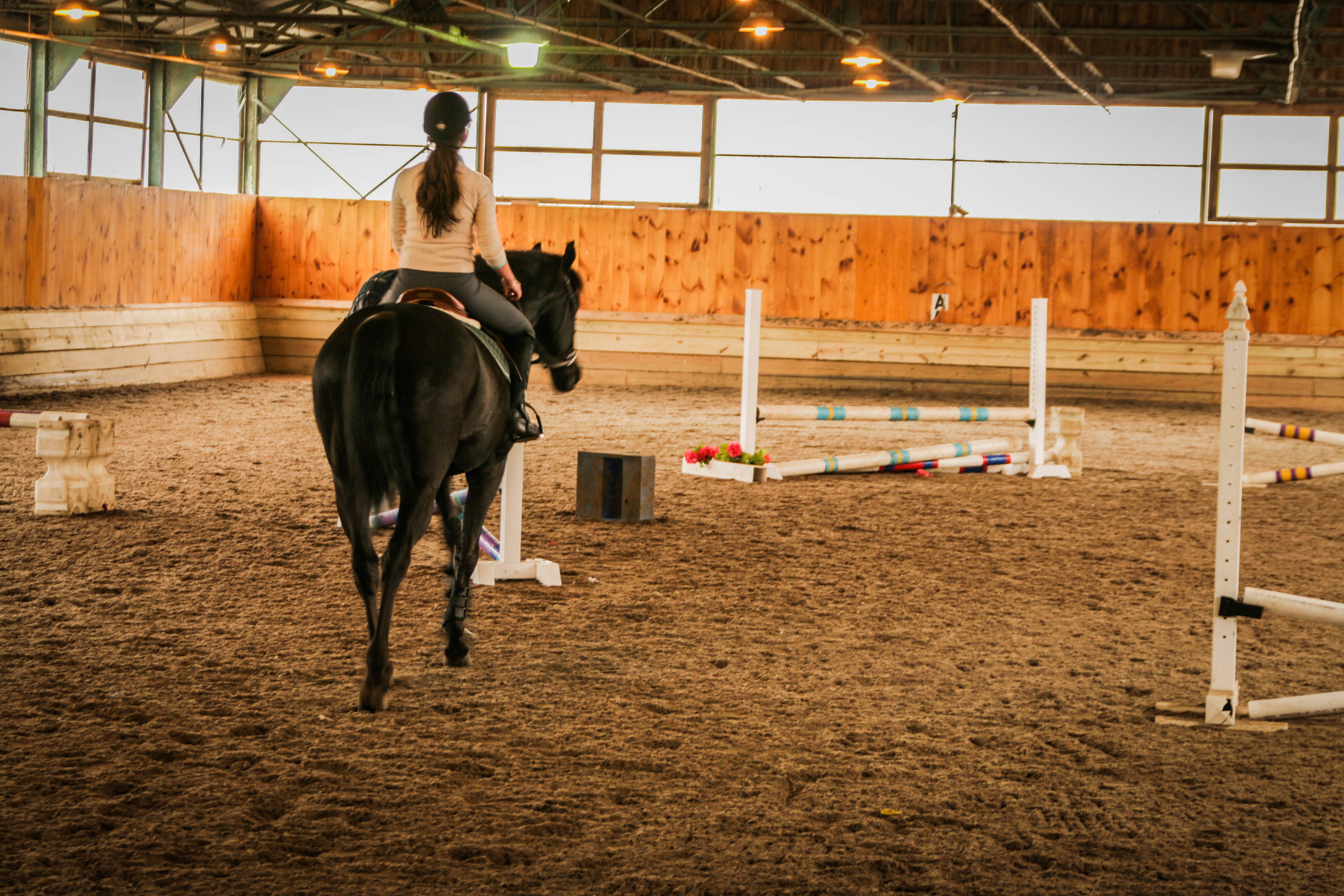
 Maintenance can be one of the biggest hassles when it comes to taking care of a horse arena. Some arenas have to be watered daily, or groomed daily, or raked daily, the list goes on and on. Our dust-free arena footing, TruStride, LiteStride, or 5K Ranch, are all very low maintenance. In my opinion, that’s the best part about them! They do not have to be watered, ever, and are groomed very seldom. We’ve had customers who only groomed their arena once per year! We love to hear that kind of feedback from our customers. However, grooming is going to be arena specific depending on how much traffic you have in your arena.
 and a few tips to avoid these mistakes!
 doors they want installed. Doing a lot of research before going straight to building this dream barn is always ideal too. So of course I get lots of emails about horse stalls. One of the biggest questions we get at
  A five-day rain stretch has finally come to a close and you decide it’s the perfect time to take your horse outside to train and get some fresh air. Although the ground is a little soggy and wet you’re sure he’ll be okay. After you start to lunge him you notice that he’s already sliding all over the place on the slippery footing. So you decide that although you love the fresh air, it might be better to take him inside the riding arena. But once you start riding inside, you realize he still doesn’t seem to be griping the arena footing right. What is going on?
 Carolyn's Footing and Bedding Blog