No Foam Compaction, Ever!

September 1, 2015

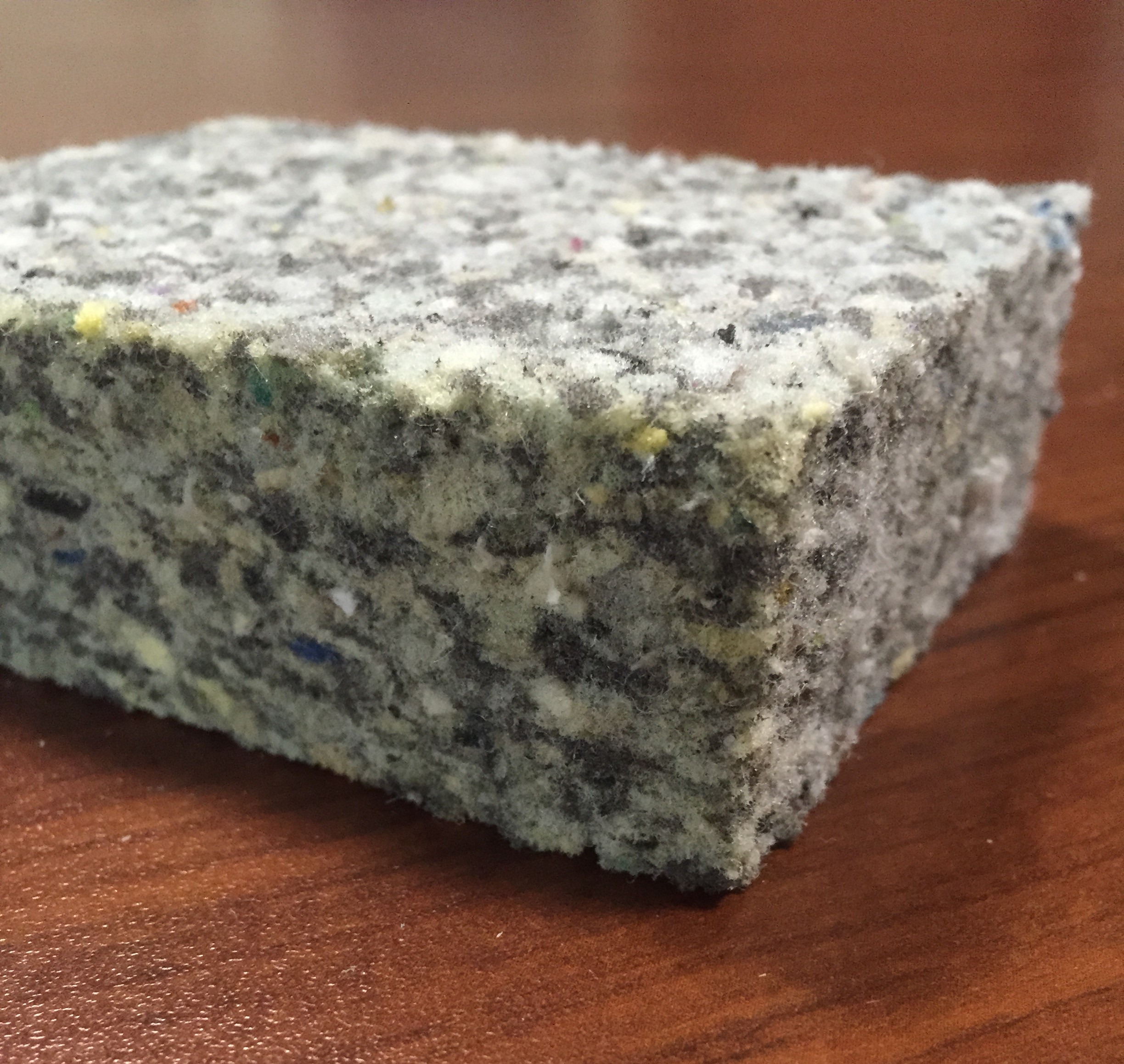
IMG_0538I’ve had a few questions lately on how our foam does over time. So I thought this would be the perfect topic for this week’s blog. My favorite thing about my job is catching up with old customers of ours. It’s usually a call or sometimes they’ll return an email describing how much their horse loves SuperStall, and most of the time I’ll hear that they’ve had them in for several years.

In 2008 we decided that we would take what we knew about cow comfort from selling mattresses to dairy farms through North Brook Farms, to IGK Equestrian and create a horse stall mattress system with the same quality foam and a topcover. The foam we choose, called an open cell foam, was specifically made to accommodate horses and their size. Horses are usually lighter animals (other than all those draft horses out there!) compared to cows and have a wider hoof; because of these differences, the foam needs to be optimized to a horse’s weight and stature and so we’ve created a foam to specifically suit a horse’s needs.

Despite being incredibly soft and light, don’t let this foam fool you – it’s very tough. Since 2003, we’ve installed tens of thousands of pieces under both cows and horses and our oldest pieces of foam under both types animals are still going strong! Our customers do not see compaction or break down and the animals continue to get a soft, supportive bed to relax and recuperate on. Over the last 12 years, topcover has been pulled back to reveal foam looking like it was just put in. We’ve tested the foam to have less than 1% compaction over a decade of keeping animals comfortable, and our customers are truly amazed at how the foam never changes and consistently offers their horses a supportive surface for their legs and hooves in their box stalls.  One word of caution when using these mattresses: be ready to hear the snores of a horse that you never thought would lay down. Loud snores have scared the dickens out of more than a few owners and hands coming in for AM chores.

I’d love to hear any other questions that you may have about our SuperStall System! Please feel free to contact me at info@igkequestrian.com!

Breathing in Dusty Arenas

August 24, 2015

Everyone that rides horses has probably been in a dusty indoor or outdoor arena. Like the ones where just walking into the arena kicks up dust. Whenever I work a horse or ride in an arena like this, I notice that I continue blowing dirt out of my nose for the next four hours. It got me thinking, if I’m inhaling that much dust, how much is the horse I’m working with taking in?

While doing some research I found out some really interesting information. The average adult human consumes roughly 19 liters or 5 gallons during light activity such as lunging and light riding. To put this into perspective, the average gas can (like the ones you fill up lawnmowers with) are 5 gallons. Meanwhile, while a horse is in a walk, they consume 50-70 liters (13-18 Gallons) per minute depending on size. They’re consuming roughly 3 times the amount of air that we are. During a heavy workout such as running a race or playing a sport, a human consumes 80 liters per minute (21 Gallons). This amount could fill a commercial size garbage can. When a horse is at their peak, let’s say a thoroughbred running a race, they consume 1350 liters per minute or 356 Gallons! An average bath tub holds 60 gallons, the amount of oxygen that a horse uses per minute when galloping equals almost 6 bath tubs full of oxygen!

After trying to comprehend these numberHorses Breathing in Dusts, as mind blowing as they are to me, I realize that it is crazy that we allow our horses to breathe in this dust. It makes us uncomfortable, so why do we let them breathe it when they’re taking in much more than we are? Horses have hairs inside their nostrils, just like us, to filter out debris. Further in their repertory system, they have moist mucus membranes that help to capture and filter foreign material. This membrane lines the twists and turns of the airways of the horse. If the dust is captured in this part of the airways, it will be pushed back out through a sneeze or a runny nose. It can get pretty thick inside their nose, which is when you can notice a horse sneezing often when riding or trying to push it out. If some dust gets past this, it will go further into the respiratory system. If it surpasses this defense, it will go into the tracheal and bronchial tubes, where it will either be sneezed out or swallowed; this is why your horses sneezes much more in an indoor arena. It can however end up deep into the lungs, which can cause major issues.

Next time that you’re lunging or riding your horse in an arena and feel your nose fill up with dust, think about how they feel. For your health and your horse’s it’s important to look into a dust free surface. Fighting dust is a big, uphill battle. You can try virtually everything to limit dust, but the best way to limit dust is to purchase a footing that is a dust-free footing. All of the footings at IGK Equestrian are dust-free, you never have to water them or maintain them to keep them dust free. Keep your nose, and more importantly, your horse’s nose free of dust, so that you can focus on training your horse, and not worrying about his/her health.

Combating Flies in Your Horse Barn

August 17, 2015

Summers are the best time for horses. You can train almost every day in the summer and do work around openphotonet_hairy flythe barn without wearing fifteen layers of clothing. Another thing that comes along with warm weather: flies in your barn. These pesky, annoying pests are very common around stables, barns, and outdoor arenas.
You can probably find a few different species of flies in your barn, including the house fly and the stable fly. The main difference between the two is that stable flies are blood suckers, and will often attack the flanks of your horses, which causes them to stomp or kick at themselves. They’re very aggravating to your horses, and can also carry harmful diseases that can be transferred to your horse when they bite.

Horse barns are the perfect habitat for these insects. They provide food, moisture, and the perfect breeding grounds for flies, so you could end up with a lot of them. You will probably be constantly scratching your head on how to get rid of them or at least decrease the population. I’ve made a small list of a few tips on how to help reduce the population.

  • Reduce their breeding grounds, get the manure out of their stall as soon as possible and store your manure pile as far away from your barn as you can.
  • Store your feed in tightly sealed containers so that flies cannot get into your feed.
  • Use fans to blow down and out of your barn, this can prevent flies from entering the barn in the first place.
  • Looking into purchasing Fly Predators, these are relatively inexpensive and can get shipped right to your door. An example of a fly predator is a small non-stinging wasp. You would dump the container that they come in on your manure pile around dusk, both the wasps and wasp larva feed on the flies and fly larva.
  • A more expensive approach is to install a horse fly spraying system in your barn. These can be custom configured to your barn and sprays a light insecticide mist in your barn 24/7 and are relatively maintenance free.
  • Install fly traps or sticky glue around your barn, (Where horses can’t reach them) to collect some flies. The numbers of flies on these traps can also help to determine if you need to boost up your pest management or if you are doing well in maintaining low fly numbers.

IGK Equestrian’s SuperStall is very helpful with aiding the fight to decline the flies in your barn. Deep warm bedding in stalls along with manure in stalls are a fly’s favorite spot to lay eggs. When SuperStall is installed in stalls, you’re only using enough bedding on the surface to soak up urine and manure, therefore stopping the possibility of breeding in deep bedding.  By eliminating the deep warm bedding for the flies to breed, you tremendously decrease the fly population in your barn.

How do you combat fly problems?

Come See Us at the Empire Farm Days!

August 12, 2015

IMG_0276This week, from the 11th to the 13th, we will be at the Empire Farm Days in Seneca Falls, NY! The Empire Farm Days is the largest outdoor agricultural trade show in the Northeastern United States. It showcases all of the latest farm equipment, dairy industry innovations, live animal seminars and more than 600 exhibits! We will be there showing off our dust-free arena footings and SuperStalls along with our father company: North Brook Farms. North Brook Farms sells SuperStalls for Dairy Farms with the option of a few different topcovers to choose from. So come and find us on Make-A-Buck Lane, booth 317 and stop by and say hi! We’d love to meet you!

SuperStall Saves on Time and Money!

August 12, 2015

Who loves spending hours and hours taking care of a horse stall? Not me that is for sure. I think the biggest issue that takes up the most time with mucking a stall is the horses that love to spread their manure around the entire stall. These are the types of stalls where you have to go through every inch of the stall with a pitch fork to make sure to separate the manure from the 3 inches of bedding. A few different barns that I have been in have either rubber mats as the flooring, or just a dirt floor. These types of floors normally have a few inches of bedding on top of the floor or mats; which can lead to hours of your time trying to differentiate the manure from the bedding.

I think my favorite part about SuperStalls is the fact that you save so much time! You only put in enough bedding to soak up the urine. You don’t have three inches of bedding to sort through to muck out the stall. You literally go right into the stall, pick up the wet bedding and manure and you’re done! SuperStalls need at the most, an inch of bedding. The topcover of our stalls are soft on the hocks so that there doesn’t need to be deep bedding for your horse to lie down in this stall. By having less than once inch of bedding, you will notice a huge difference in how much bedding you use and the tHunter Harrison 037ime spent going through and mucking the stall. You’ll be saving tremendously on time and labor!
I recently caught up with a customer that installed our SuperStalls in the fall of 2014. She was telling me that her gelding loves to lie down in his stall. After she installed our SuperStall, she noticed he no longer had lesions or sores on his hocks and ankles. She said how much her horses love the SuperStalls and spend more time lying down in their stalls than ever before. It truly was great feedback to hear.

We love to hear from our customers on how much they, and their horses, love our SuperStall! What is your favorite part about your SuperStall system?

We’re Headed to Switzerland!

August 12, 2015

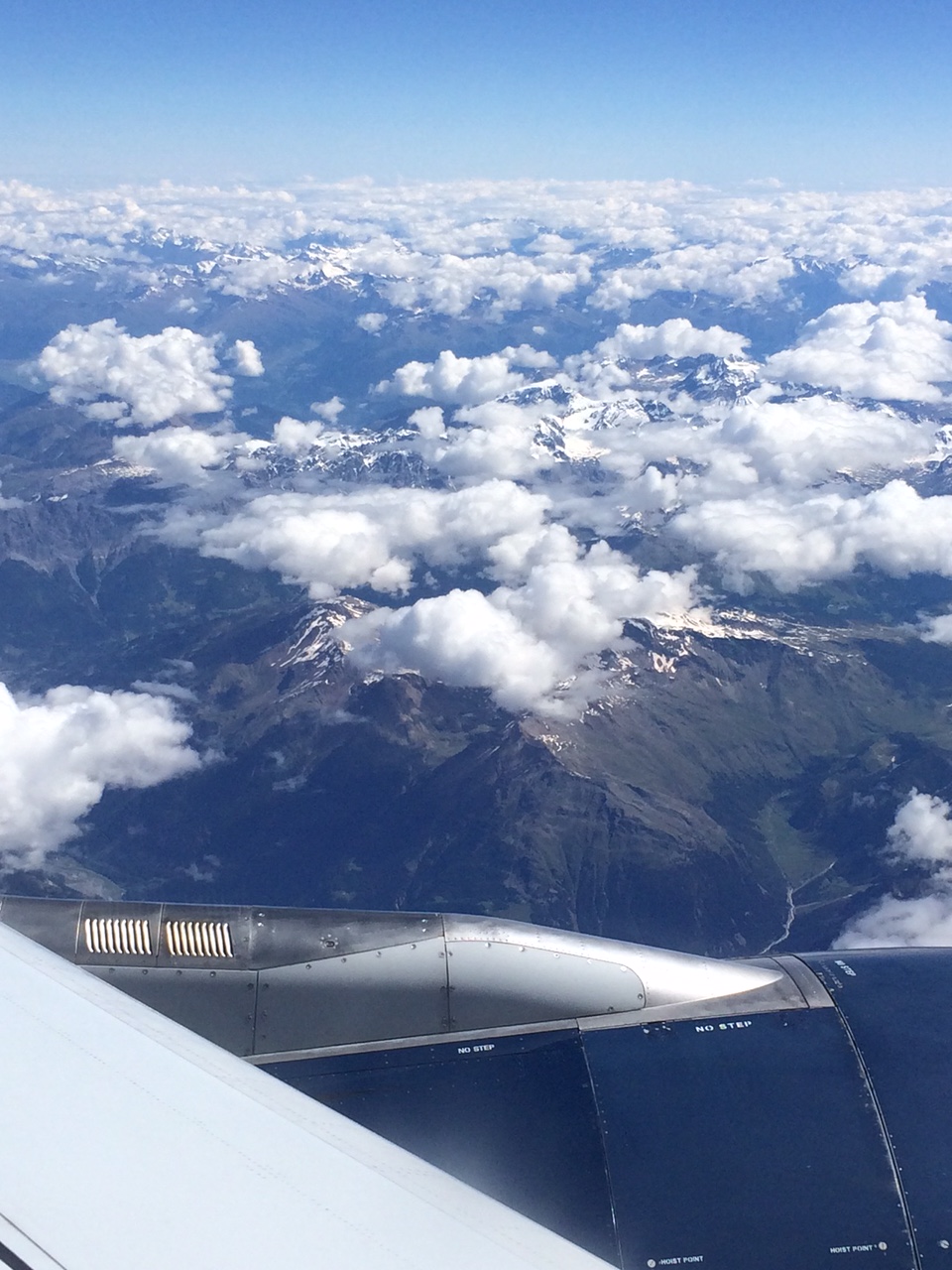
Flying over the Swiss Alps!

We are happy to announce that IGK Equestrian is going to Switzerland, well two of us are! Grant Kyle, Senior Vice President, and Ian Kyle, VP of Research and Development were both invited to represent IGK Equestrian at the Fédération Equestre Internationale Headquarters, located in Lausanne, Switzerland. FEI establishes the rules and regulations for all events in Dressage, Jumping, Eventing, Driving, Endurance, Vaulting and Reining all across the world.

A meeting of footing manufacturers, footing experts and scientists all around the globe were invited to Switzerland to discuss the introduction of an FEI seal of approval for arena surfaces for Jumping. Being invited to such a prestigious meeting of the minds along with 40 other experts in the field was truly an honor. It will be great hearing about what was discussed and accomplished at this meeting. We can’t wait to hear all about it when Ian and Grant return and of course to see pictures of the beautiful country of Switzerland!

IGK Equestrian Teams With Project Green Ball

August 12, 2015

In 2012, IGK Equestrian teamed up with Project Green Ball to perfect a way to recycle tennis balls. Over three hundred million tennis balls are manufactured around the world every year, and every year tens of thousands of tennis balls are thrown into the trash, and then discarded into landfills. Instead of letting all of these tennis balls bounce their way to a landfill, IGK Equestrian and Project Green Ball have found a way to recycle them.

Dana Hall indoor arena with our Grand Slam Footing

Every day we get boxes and boxes of tennis balls shipped to our warehouse. If you headed out to the back of our facility where all of the tennis balls are warehoused, you would see just how many tennis balls are sent to us. At one point we had as many as 200,000 tennis balls.

If you don’t know, IGK Equestrian has been manufacturing horse footing products since 2003 (for over 12 years). We’ve created the perfect dust-free riding surface for every discipline. By teaming up with Project Green Ball, we have agreed to help recycle the tennis balls, grinding them up and incorporating them into a special mix for our dust-free synthetic footing, called our Grand Slam footing (“GS”).

In 2012, Dana Hall School in Wellesley, MA purchased the very first arena using ground tennis balls which provided the fiber and rubber for our footing recipe. Through Project Green Ball, a granting fund for therapeutic riding arenas has been established by UPS, specifically addressing the recycling of tennis balls. The EquiCenter, Inc, located in Honeoye Falls, NY received such a grant in 2013 for their indoor therapeutic arena. IGK Equestrian has received positive feedback from both facility operators and was invited to the donation ceremony at the EquiCenter. You can check out our Facebook Page to see pictures of the event.

There is still opportunity to have your therapeutic facility funded through UPS for the purchase of “GS” riding arena surface. (We are here to answer any technical questions you may have about the base prep and installation of your arena surface.) If you’re interested in applying for a grant for your therapeutic riding facility you may visit Projectgreenball.org or email info@projectgreenball.org.

PARMA Groomers are the Perfect Accessory

August 12, 2015

IMG_2197Maintenance can be one of the biggest hassles when it comes to taking care of a horse arena.  Some arenas have to be watered daily, or groomed daily, or raked daily, the list goes on and on.  Our dust-free arena footing, TruStride, LiteStride, or 5K Ranch, are all very low maintenance. In my opinion, that’s the best part about them! They do not have to be watered, ever, and are groomed very seldom. We’ve had customers who only groomed their arena once per year! We love to hear that kind of feedback from our customers.  However, grooming is going to be arena specific depending on how much traffic you have in your arena.

In 2013 IGK Equestrian became a certified dealer for PARMA Arena Groomers. There are many different groomers on the market but we choose to partner with PARMA Arena Groomers because of their high quality construction, affordable pricing, and specialization in synthetic groomers.  Every customer of ours that has purchased a groomer along with their footing, have been extremely happy with their purchase. The specific groomers that we recommend are Coil Tine groomers from PARMA. These groomers are specifically designed for less aggressive grooming. They groom only about an inch into the footing and don’t dig down too deep; therefore they do not pull the footing one way or another. Our footing only needs the top inch of the footing to be groomed, and PARMA Groomers do exactly that.

The mini models of PARMA Groomers come in five, six, seven and eight feet widths so that you can get a custom groomer to perfectly fit your arena. After choosing the correct width, you then would choose if you want your coil tines nine inches apart or three.

Maintenance with our dust-free synthetic footing is easy, but you can make it even easier with a PARMA Groomer.  Feel free to check out ourinstallation video that shows exactly how our footing is installed and a small snippet of a PARMA Groomer in action.

Biggest Mistakes When Installing an Outdoor Arena

August 12, 2015

The summer weather has everyone wanting to start working their horses outside, and get out of their indoor arenas. I get the most calls about going about outdoor arenas just around the beginning of June. When building anything, a minor mistake can lead to something very costly, and a horse arena is no different. There are many common mistakes that can be easily avoided during the construction of your arena. The following are the top mistakes that I commonly see, IMG_2186and a few tips to avoid these mistakes!

  • Location: Drainage is one of the biggest problems that arise in outdoor arenas. When choosing a spot to build an arena, you must be sure that the arena is placed in the correct spot. The spot should have sufficient natural drainage, located on a high spot of your property, and relatively flat. Making sure that your arena is placed in the correct spot, you can avoid major drainage issues in the future.
  • Improper Drainage: In addition to the location of the outdoor arena allowing for natural drainage, additional drainage also needs to be added. If no drainage is added, you can end up with a swampy footing even after a small rainfall. There should be drainage around the entire perimeter of the arena. Depending on the material of the ground, you may need to add more drainage in addition to the perimeter drainage. Every arena is going to be different; no one arena is the same.
  • Wrong Base Materials: The material that the base is made up of is very important. A base made up of large rocks is the worst thing you can do for your arena for the fact that these rocks will not compact together. Many times the big rocks end up mixing in with your footing, painting a dangerous scenario if you were to train your horse and have that rock go directly into the hoof. For our footing we always suggest bigger rocks for the very bottom of the base, and small aggregate limestone on top of the bigger rocks. The limestone needs to be washed so that no dust can come from it. These small rocks will compact together once watered and rolled to create a solid base. The stone dust base should be 3-4 inches compacted and crowned. Crowned means that the middle of the arena is the highest point, and slopes slightly to the outside edges.
  • Installing the footing incorrectly: No matter where you get your footing, it needs to be installed properly. Many people think they can just lay the footing down and groom it and it will be fine; which is very wrong. The most important thing for the footing is that it’s level. High or low spots for your arena can hold water, or severely hurt your horse if he/she were to step in one while training. We always suggest using a laser level to be sure that your arena is completely level. By following our Installation Video, you can be sure that you properly install our dust-free footing, and not make a costly mistake.

Be sure to plan ahead when you are brainstorming your new arena, and please feel free to give us a call at any time for our assistance!

Add SuperStall Mattresses to Your Dream Barn

August 12, 2015

Everyone loves to plan their dream barn. Like what the doors will look like, if it will have a cupola, or what stall IMG_2221 (1)doors they want installed. Doing a lot of research before going straight to building this dream barn is always ideal too. So of course I get lots of emails about horse stalls. One of the biggest questions we get at IGK Equestrian is why should I choose your SuperStall for the floor of my stall??

Let’s take a look at the variety of options available for stall floors: topsoil, clay, sand, concrete, asphalt, road base mix, solid rubber mats, grid mats, wood, sand…. The list goes on and on. But the main thing to worry about when it comes to the floor is the well-being of the horse, and then the owner’s interest second. The first and most important aspect of flooring is the ability to be able to “give” a little when the horse steps onto it and be comfortable to stand on for long periods of time; this will wipe out potential strains in the feet and legs of the horse from standing on hard surfaces. The material would need to be able to stay dry to eliminate the issue of bacteria infecting the horse’s hooves, and the issues caused from horses breathing in ammonia in their stall. Not to mention that horse owners do not particularly want to walk into a poignant smelling barn. The surface needs to provide the right amount of traction. If there is too little traction, the horse could potentially slip when the surface is wet, causing not only injuries to the horse, but also creating a fear of the stall. The flooring also needs to be level. Some materials start out level and eventually develop “pot holes” in different areas of the stall. You will end up using more bedding to try and fill these “pot holes” which will then just encourage the horse to use the bathroom in these same spots, further deepening the holes. The uneven surface can cause the horse to trip in their stall, again potentially creating a fear of the stall or worst case scenario: injuries to the horse. Now for the owner’s preferences: it needs to be durable, long lasting, low maintenance and easy to clean. No one wants to spend hours and hours fixing the flooring every few weeks, or replacing it ever year or two.

Sand, concrete, limestone dust and wooden floors are all the most popular floor choices, but each of them has a vice or two. Sand has the issue of being too absorbent, concrete floors and limestone dust do not provide the adequate cushioning for the horses, and wooden floors can become very slippery when wet and can rot away. Rubber floor mats are also another option, but some of these also have issues. If you get the ones that inter-lock together or are laid down next to one another, liquids can seep underneath these mats, creating a noxious smell and possible bacteria issues.

Our SuperStall® mattress system is the perfect solution to stall flooring. It is a one piece, wall-to-wall memory foam mattress with a non-slip durable rubber topcover. It provides the perfect amount of cushioning for your horse that is easy on the legs and withstands the toughest horse wear and tear. It is easy to clean and low maintenance. Our customers have used over 70 percent less bedding, saving in time and money! The topcover attaches to the wall so no liquids can make their way underneath, eliminating the issues of bad smells and bacteria.

Whether deciding what stall flooring you want in your new dream barn, looking to add a few more stalls, or replacing some old stall flooring, we would love to talk with you more about the best option for your stall!