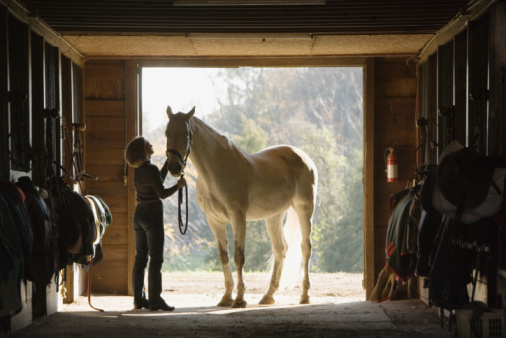
Keeping Horses Cool During Hot Weather

June 16, 2016

The summer hasn’t technically started yet but the heat is climbing steadily here in Upstate NY. Always be sure to do everything you can to keep your horse cool and comfortable this summer. Here are a few tips:

  • Provide shade. If your horse is outside in the paddock for the hotter part of the day, make sure there is provided shade. A run- in shed wouldhorse-1328890_1920 be the best option, but trees can also be a source of shade.
  • Choose Cooler Turnout Times. A lot of barns around here turn their horses out at night. If you don’t have the option to turn the horses out at night, then turn them out early in the morning or later in the day.
  • Create Airflow. If you are able to keep the horses in the barn doing the day, be sure that air is flowing through the barn and the horses are
    getting air in their stalls. Fans are a great source to help with airflow, but be sure that they are in a position where no horses can get ahold of cords and plugs.
  • Adjust your Riding Schedule. Try riding early in the morning or late at night. The temperature will be the lowest during these times of day.

Always check for signs of heat stress such as increased heart rate and respiration rates, profuse sweating, or droopy ears. If there are signs of heat stress, call your vet and hose your horse off with water and immediately remove the water with a sweat scraper while you wait for your vet to arrive. We all look forward to summer riding, just be sure to keep your horse comfortable this summer!

Do you turn your horses out at night or during the day in summer?

Geotextile Fabric

June 16, 2016

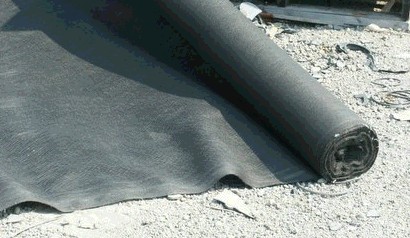
I always talk about how important the base of the arena is. If you install the base incorrectly, you could spend large amounts of money trying to fix it later down the road. One layer in the base that is often overlooked is the geotextile fabric. There are two different types of geotextile fabric: woven and non-woven fabric.

Woven geotextile fabric is a bit cheaper of an option that is created by actually weaving individual threads on a loom. Woven geotextile is strong, and pretty stiff. It is primarily used for steepened slopes, retaining walls, wind erosion, or for cushion. The downfalls of woven geotextile fabric are that it can be easily opened by angular aggregate and does not drain well.

Non-woven fabric is created when the material is bonded with chemicals or with heat to create the consistent surface. This fabric is created for ideal filtration and drainage. It is mostly used for erosion control, separating layers, or drainage fabric. Non-woven fabric is a bit more expensive than woven, and is slightly thinner but can be made at different thicknesses or can be reinforced.

Non-woven geotextile fabricWhen explaining the ideal base that you need for your arena, we always recommend 2-3 inches of large aggregate stone, a layer of geotextile fabric to separate the stone layers, 2-3 inches of crushed stone on top of the fabric, and your footing directly on top of your compacted crushed stone. The geotextile fabric that should be used is a non-woven fabric. This allows for all water to be able to move freely through your base, so that you don’t have any type of water buildup in your base, leading to water buildup in your footing. The reason we also recommend non-woven is because it is stronger than the woven fabric in that the large aggregate stones can’t break through. This ensures that you don’t have stones migrating up into your footing.

We love to help people who are planning their arenas. If you have any questions about what we recommend for your base construction, please feel free to give us a call!

Cost of Maintaining a Sand Arena

June 16, 2016

Maintaining an arena is not always easy. Depending on how much traffic you get a day on your riding ring, you could potentially be grooming it every few days. I want to take a look at the cost of maintaining a sand arena.

For this price breakdown, we are going to assume the following scenario: you have an average 66 x 130 indoor arena with 5 horses a day on the footing. With 5 horses a day, you will have to drag every other day from the ruts and holes that appear. You own a newer compact diesel tractor that has 40hp and a 5ft arena groomer. It takes you 45 minutes to groom your arena from start to finish. You ride year round in your indoor arena.

If you groom your arena for 45 minutes every other day, it equals out to spending 8,213 minutes or 137 hours a year grooming your arena. If you are paying a farm hand to do the work, say minimum wage, (here in New York, minimum wage is $9) you would spend $1,232 paying your farm hand to groom the arena. On top of the time and wages to groom the arena, you also have to pay for gas for the tractor to groom the arena. For your newer (5 year old) compact diesel tractor to work this arena all year with diesel fuel at $2.40/gallon; you would spend $493 per year. Total grooming maintenance per year for your sand arena: $1,725.

IMG_2358Now that number is just looking at grooming the footing. The other issue you deal with in any sand arena is dust. We can take a look at both watering your arena and using Magnesium Chloride Flakes, which seem to be the other popular options. You could get a sprinkler system installed, which is thousands of dollars up front, but then you are still using hundreds of gallons every time you water your footing. Another option is to hand water your arena with just a long hose. Again you are using hundreds of gallons of water to accomplish this, but then you are spending roughly an hour watering the arena. You would have to hand water it every four days, and if you pay a farm hand to do that it would be $821 in wages a year. If you have a well you have to be conscious about how much water you use so that your well doesn’t go dry, and if you have city water, you have to pay per 1000 gallons you use; which can add up pretty fast if you’re constantly watering an arena. Many people use Magnesium chloride flakes to fight dust in their arenas.  Magnesium chloride flakes are roughly $20/bag. For your 66×130 arena, you would need two pallets, or 96 bags; totaling in $1,920 for your arena. These would have to spread and then mixed into your footing. Magnesium Chloride has to be continually added to your arena, therefore forcing you to spend more money all the time to fight the dust.

Instead of worrying about the cost of maintaining a sand arena, switch to an arena footing that will never have to be watered and will remain dust-free! You not only save lots of time and money not worrying about your footing being watered, but you also save on maintenance. We have many customers say that they only have to drag once a month! The sand, fibers and wax create a stable surface that supports your horse in every stride it takes, while not moving too much to the point where holes and ruts are created. Although synthetic footings are pricier up front, but you will save both time and money over time as our footing continues to out perform traditional sand footing.

East-West Arena Construction

June 16, 2016
East-west arena construction horse arena IGK Equestrian footing installation

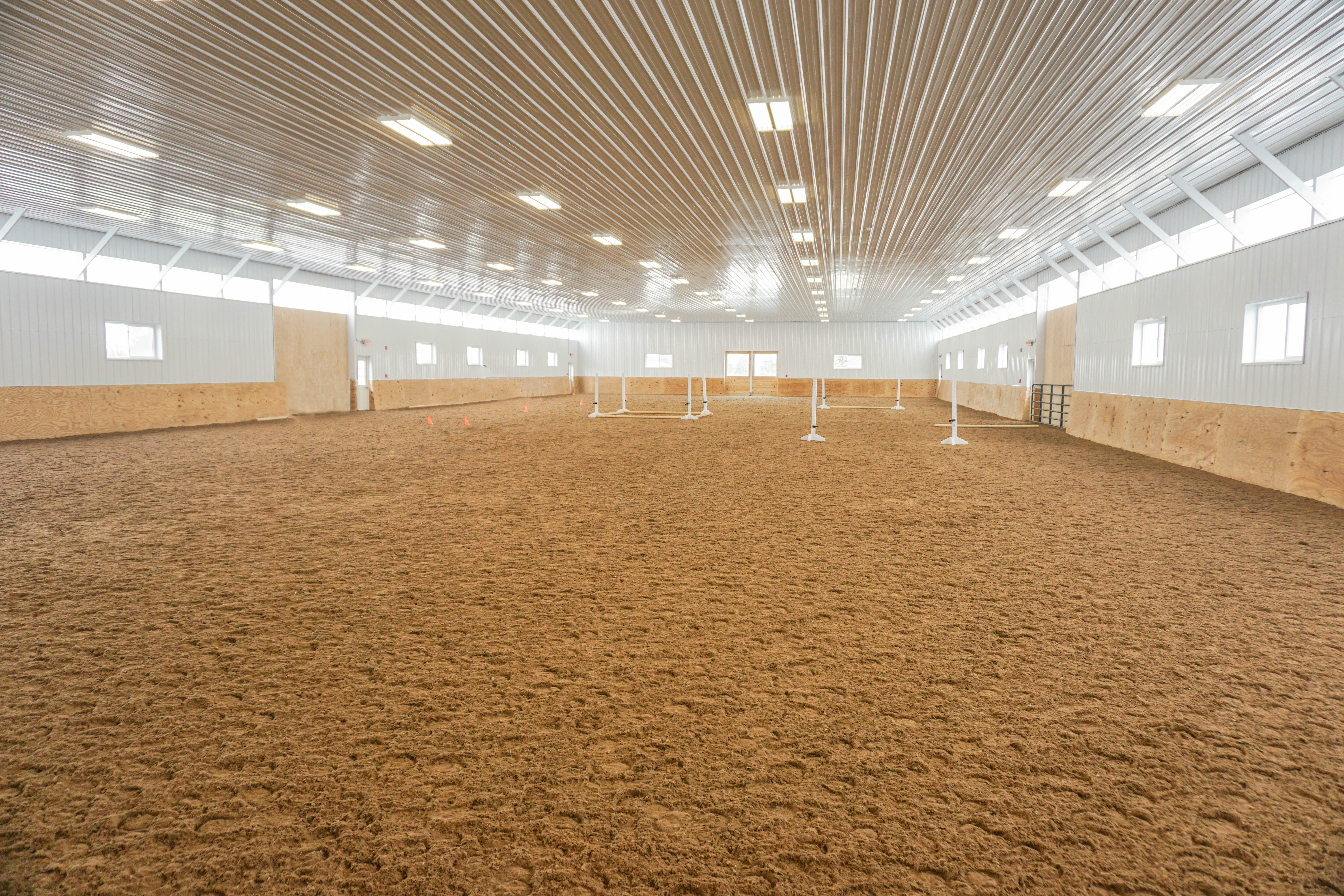
A gorgeous arena with footing installed by East-West Arena Construction

IGK Equestrian has dealers all over the country. These dealers have all installed our footings in various settings. Our biggest dealer is

Mike Waidlich from East-West Arena Construction, located in Millers Falls, MA. Over the past few years, Mike has been building and installing many arenas with our dust-free footings. I wanted to catch up with Mike and ask him a few important questions about the excavation and installation process so that others can better understand it:

How do you choose an appropriate arena site, for both an indoor and outdoor arena? What do you look for?

“The best site for both an indoor and outdoor arena is a place on the property that is elevated above the surrounding land with places for water run off. The better the site, the less excavation work is needed to complete the project. This varies from site to site and is one of the most important parts to quoting a project.”

Do you need to excavate a site?

“For new facilities there is always some excavation work that needs to be done. Usually this involves removing the topsoil and grading the natural sub-base layer.”

What type of fill do you use for the sub-base and base?

“At places with good natural material, we can use the existing material as our sub base. At places that are wet or need to be elevated to promote drainage, we use either a screened bank run gravel or in some cases processed gravel to build the site up. This may vary based on pricing and availability.  For the base, we usually use stone dust. The material is usually 1/4″ and smaller in size. It compacts well and seals out any rocks or gravel beneath it from coming up into the footing.”

What is the best drainage design to use for an indoor vs. an outdoor arena?

“Outdoor arenas need to be elevated above the surrounding land and also pitched in order to get the water to run off the arena surface. With wax coated footing like IGK, we usually use a half percent slope or six inches of pitch over a hundred feet. Depending on arena size, we use one plane or a crowned center. Indoor arenas should be elevated and have good drainage around the outside of the building so water is not able to flow inside.”

What is your opinion of the grid system vs. stone dust for an arena base? Is one system better in an outdoor vs. an indoor arena?

“In my opinion stone dust is the better option. The cost is significantly less and I haven’t seen much of a difference in performance or longevity.”

How do you install the footing layer?

“We grade every layer with precision laser guided equipment. I use a Level-Best grading box on a tracked skid steer. We set the desired pitch with a laser and remote receiver and the machine automatically adjusts the cutting edge of the blade to cut the slope. We’re accurate to within a quarter inch. We install the footing with this equipment as well.”

Why do you/ your customers choose IGK Equestrian’s Footing?

“We’ve been very happy with the products from IGK. For our customers, the low maintenance is very desirable. There are no irrigation or watering routines needed. For a lot of facilities who don’t have someone to do that maintenance, IGK dust free footing is the perfect solution. The mixture of sand, fiber and wax is just right. I like that it’s consistently the same product because it comes straight from the source in NY. Good sand is a hard to thing to find in many areas and IGK takes the guess work out.”

What has been the feedback from customers about IGK Equestrian’s Footing?

“We’ve had a great response to the footing. Since we started offering it to our product line it is consistently the most desired product we offer. Our customers who have purchased it from us are thrilled with the results.”

How do you like installing IGK Equestrian’s footing?

“The fact that it comes pre blended and ready to be installed saves us a lot of time. I like having the option to ship in bulk or by the bulk bags because some sites are difficult to access.”

How long have you been doing excavation work?

“I grew up on a farm with extended family (aunts and uncles) in the dairy business. I’ve been running trucks and heavy equipment since I was tall enough to reach the pedals. After college I started in the trucking business. We hauled fertilizer to farms, landscapers and lawn care companies throughout the northeast. I slowly started buying heavy equipment and doing small jobs on the side. In 2011 hurricane Irene came through our area and we had record flooding; which eroded farm land and river banks through our area. I spent the next 8 months working to repair hundreds of acres of land; which propelled me into the excavation market. As far as the arena work goes, my wife Naomi has been a life long equestrian and convinced me to try installing horse arenas as a side market. One thing led to another and now we have a consistent arena building business.”

To contact East-West Arena Construction for a quote or for more information, check out their website: http://www.eastwest-construction.com or take a look at some of their beautiful arenas on their Facebook Page!

Standard Pattern to Groom a Riding Ring

May 3, 2016

Riding on a freshly groomed arena is my favorite thing. You put fresh hoof prints into the perfectly fluffed footing. But riding on a badly groomed arena? Not the best experience. I never realized that there is a specific way to groom an arena until I looked into it. Let’s take a look at the standard pattern to groom a riding ring.

I’m a very visual person, so I pulled together some quick visuals so that you can see what I’m explaining. Start by dragging the ring down the centerline. Once you get to the end of the arena, turn left or right and go towards the outside of the arena. Follow the rail until you get back to the beginning end of the arena, turning towards where you originally entered the ring. Follow the outside of the original drag on the centerline. When you get to the end of the ring again, follow the inside of the drag along the rail. Follow this same pattern, at a consistent speed and you will eventually end up with the outer-perimeter of the ring left un-dragged. Finish dragging the outer perimeter, and exit down the centerline. Throughout the standard pattern, be sure to keep the corners smooth and the speed of the drag consistent. The next time that you drag the arena, be sure to go in the alternate
direction. This will help to keep the footing evenly distributed throughout your ring.

.                                                       Pic1    pic2    pic3    Pic4

There are a few more ways to drag an arena, including some ways to help pull footing from the outside rails or corners, towards the center of your arena. If you have an established crown, take caution on what grooming pattern it used; grooming it the incorrect way could damage the specific crown put into place.

IGK Equestrian is a certified dealer for Parma Groomers. The Mini Groomer with a Coil Tine Conversion is the perfect groomer for synthetic footing. The coil tines don’t dig too deep into the footing, so as not to disturb the fibers and the groomer is a very lightweight groomer, weighig in at right around 400 pounds! Grooming the standard groom pattern in your IGK Equestrian Dust-Free footing is the best way to groom your horse arena!

What is your favorite pattern to groom your arena?

SuperStall Vs. Rubber Filled Mattress

May 3, 2016

You all know by now that I like to write my blogs based on questions I get when talking to customers. Lately I’ve been asked a lot what the difference is between a rubber filled mattress and our SuperStall Mattress. In order to explain the difference, first I’ll tell you a bit about the history of our company.

IGK Equestrian, LLC is the child company of North Brook Farms, INC. Twenty years ago, Peter and Carolyn Kyle (owners of North Brook Farms, INC and IGK Equestrian LLC) were dairy farmers milking 350 head on their 800-acre farm in central New York. Their veterinarian advised them to make their cows more comfortable, since well-rested cows produce more milk. So the Kyles decided to make the cows’ bedding softer and more enticing by incorporating recycled rubber.

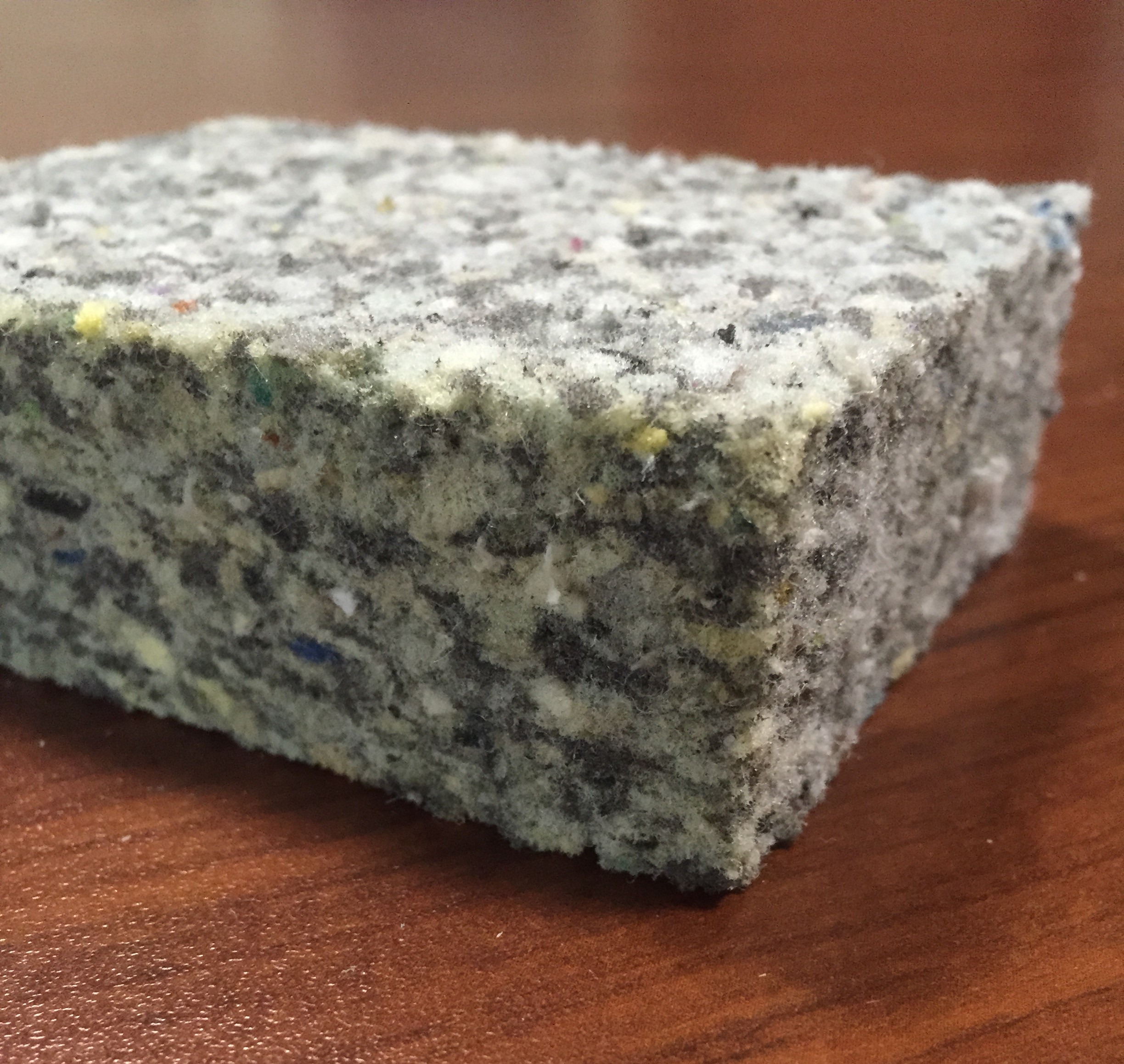
They started the business by making these rubber filled mattresses. Over time we realized there were a few things about the rubber mattresses that we didn’t love. The first thing, that was very apparent was that the rubber filled cells, which were about 4ft x 5ft, were very heavy; weighing about 130 pounds! Both the manufacture process of these mattresses and the installation process were very labor intensive. During the installation process, the mattresses had to be pulled off of a pallet, carried to where they were getting laid down and then maneuvered so that they were laying correctly. Everyone’s arms were aching by the time the installation was completed! The second major downfall of these mattresses that we noticed is over time the rubber inside the cells compact. After being under an animal for a long duration, the rubber will nestle down in the cells of the mattress, where the various sizes and pieces of rubber fit together like a puzzle, and become hard. Having this mattress compact over time and become hard defeats the purpose of a comfort mattress for your animal. When we realized that the rubber filled mattresses did this, we decided to switch our systems to a foamSuperStall Foam Horse Mattress System mattress.

We have been using foam in our SuperStalls for over 10 years now. Our foam has been tested over time and has shown less than 1% compaction over a ten-year period. The foam is a lot less heavy than a traditional rubber filled mattress and has proven to provide comfort time and time again both in the dairy and horse industry! Your horse will be much more comfortable in their stall for years to come with a SuperStall System than a rubber filled mattress system!

Dyna’s Story- Navicular Syndrome

May 3, 2016
12987958_944201372343172_1679259081_n

Cindy & Dyna

I love my job. Mostly because I love horses, and get to look at gorgeous barns, pretty horses, and I get to talk to horse people all day. But talking to someone who loves an animal as much as you do is probably my favorite part about my job. Selling the products that we sell at IGK Equestrian, I get to talk to lots of horse people! Last week I had a local woman, Cindy, call me who had heard about our mattress system, from a friend who has our mattresses in her dairy barn! She was so excited about our SuperStall Mattresses that she drove out that day to the office to take a look at our product. She told me how she has two horses, and that one of them has Navicular Syndrome. I immediately fell in love with her story and her horse. I wanted to do everything I could to help out “Dyna”! Here is her story:

“Dyna found me in 2006 at the age of 8. She had been a show horse in many types of events from jumping to western pleasure to a lesson horse by the time I met her. I knew I was purchasing a “lame” horse but to what degree was unknown and by then the bond was formed. I wanted her no matter what! We discovered her navicular at the time of purchase with a routine vet check. After X-rays and many vet appointments and farrier trials with new shoes consisting of rim pads and egg bars along with medication and joint 12980514_944201222343187_1139237171_nsupplements she has been comfortable until this past winter.Knowing that she could become more “ouchy” over time and with age I tried to think of continual ways to keep her comfortable. A friend of mine suggested your product. I researched it online and thought it would be the perfect remedy. The mattresses were installed right away (in both of my horse’s stalls) and I have seen instant relief in how Dyna walks out of her stall and overall movement. I am so grateful and thankful to have found IGK Equestrian. Dyna is a “family member” and I want her to be as comfortable and happy as possible. I love he

SuperStall Horse Mattress System

Dyna checking out her new SuperStall!

Cindy also owns Dyna’s son Riley. Riley is sound and she wants to keep him sound so she figured putting a mattress in Riley’s stall would be a great way to do that. I love hearing stories like this and how much our SuperStall Mattress can help. I have heard so many accounts about horses no longer limping out of their stall, or seeing more shavings on the horse’s body everyday because they’re constantly lying down on the SuperStall. I’m so glad that we could help Dyna feel much more comfortable! If you have any questions and would like to know how our SuperStall Mattress System can benefit your horse, don’t hesitate to give me a call!

Kick Walls in Indoor Arenas

April 5, 2016

Gorgeous Indoor Arena kick wallsI’ve mentioned before, that my favorite part about selling footing is being able to go to lots of different barns and look at how each barn is designed differently. A trend that I have noticed a lot recently is more and more barns are installing kick walls in their indoor arenas. Let’s take a look at the importance of kick walls!

Kick walls are both aesthetically pleasing and serve a purpose. A kick wall is a wooden boarder around the base of the indoor arena walls. Normally a kick wall has a bit of a slant to it, around 15°, with the bottom being the most wide. You can build kick walls, or some companies such as Equitrend, has kick walls can be easily mounted.

Although kick walls make an arena have a nice, clean finish, they do have a purpose to them too! One main reason for having a kick wall is that it forces the horse away from the wall. Since the bottom of the kick walls are further away from the walls, the horse doesn’t ride right on the wall, which can save your legs if you have a naughty horse! Another major advantage of the kick wall is to keep footing from building up against the walls of the arena. Your groomer can get closer to the kick wall than the indoor arena wall because it won’t get snagged against a pole or beam. You don’t have to worry about the footing getting between the different poles in the barn and not being able to get it out from those areas.

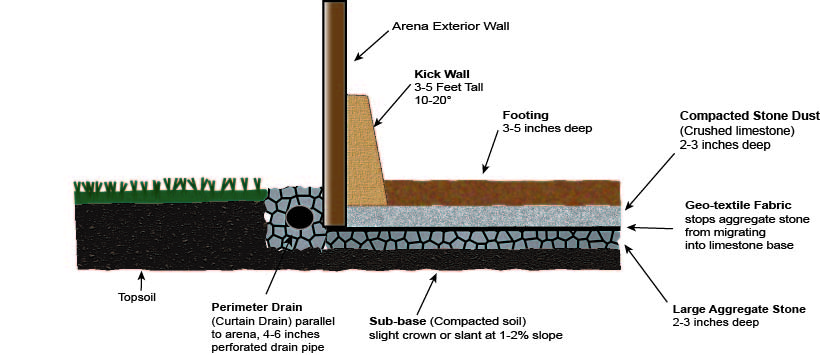
Almost all indoor arenas that install our footing choose to install kickboards. For the fact that it is so popular, we designed a side-view of how the base of your arena in an indoor arena should look when kick boards are installed. Just like outdoor arenas, you have your base installed. The base consists of 2-3 inches of large aggregate stone, a layer of geo-textile fabric, and 2-3 inches of compacted stone dust. If you are going with the traditional wood kick wall, you would build them directly on top of the stone dust. Other types of kick walls may be mounted to the arena wall after footing installation is done. After the kick walls are installed the correct depth of footing is installed depending on what type of discipline is performed in the arena. Choosing one of our dust-free footings is the perfect addition to your new arena installation. If you have any questions on base installation, or footing installation don’t hesitate to call us! You can see the side-view of an indoor arena installation below!

indoor arena footing sideview kick walls base installation

Spring Cleaning Around the Barn

March 24, 2016

Spring is officially here! And you know what that means? Spring cleaning around the barn! I always try and do cleaning around the barn when I’m there, but it really is great when you take a day (or week!) to thoroughly clean the barn. Grab everyone that boards their horses there or grab some friends and make it a party with lunch involved! Let’s take a look at some good tips on cleaning your barn!

Start with de-cobwebbing your entire barn. After a long winter cobwebs can pile up, creating a fire hazard for your barn. Use a broom or a duster on a long pole so that you can reach higher places in your barn. You can grab one at Walmart for about $17! They are really handy! Once you got all of your cobwebs down, sweep every nook and cranny of your barn. Get every corner, behind tack boxes, under doors, everywhere! You’ll notice a huge difference in your barn immediately after completing both of these cleaning tasks!Renovating a barn, spring cleaning around the barn

Since freezing temperatures are in the past, you can take down all of your heated buckets. Be sure to clean them thoroughly with a sanitizing solution and store them upside down. You may have a few extension cords that you used with the heated buckets. Wrap the extensions cords up nicely and find a good place to store them. You can easily run to your local hardware and grab some extra hooks and hang them in your tack or storage room. That way when you need them next fall you won’t have to dig through any bins looking for them!

Finish tidying up the barn by cleaning out each stall completely. Conventional mats, you would have to pull the mats up, muck out whatever bedding or manure got under the stall mats, and then sanitize the ground under the mats. With our SuperStall Mattress System, which is a wall-to-wall system, you can use a power washer to clean your stall. The mattress connects directly to the stall wall, sealing the foam under the waterproof topcover. A quick sweep of a power wash with an attached detergent (of course make sure it is safe for your horses) can easily kill bacteria and make your stall sparkling again! Spend less time on maintenance and mucking out your stalls by adding our SuperStall system to your barn this Spring during Spring cleaning time at the barn!

How do you spring clean at your barn?

Arena Etiquette

March 24, 2016

I grew up riding outside with my friends down trails, across field, everywhere. Then one day I found myself leasing a horse in a local barn, where I now had to ride in an arena with multiple people, and had no idea about arena etiquette. I quickly learned that ring etiquette is very important! Let’s take a look at some of the main riding ring rules at most arenas.

  • Be courteous when you ride with others. Everyone is at different riding levels.
  • Slower riders should stay to the inside of the arena, while faster pace riders should stay on the outside of the arena.Horse Arena 019
  • Try to ride the same direction around the arena, but if for some reason you have to pass by riders, the rule is left shoulder to left shoulder when passing another rider.
  • Mount and dismount your horse out of the way in the center of the arena, not on the rail where everyone is riding.
  • Cue your horse quietly and away from other horses. You know exactly how your horse needs to be cued, but another horse could be very responsive and you could end up cuing another rider’s horse, which could cause problems.
  • If you need to stop your horse, be sure to move out of the path of riders and into the center of the arena before your stop.
  • Be prepared for an emergency. If a rider falls of his/her horse, stop your horse immediately and dismount. If you are closest to the rider that has fallen, see if they are hurt.

Most barns have arena rules posted, before you ride, check with your barn manager on what their specific riding rules are. Follow the rules and have fun riding!

Does your arena have any additional arena riding rule?