March 24, 2016
Last week I talked about our most popular question: “how long does your arena footing last?” We talked about how the sand particle plays a huge role in the longevity of your arena footing. Today we’re going to talk about the different additives you can have in your footing and how those play into the longevity of the footing.
As I’ve spoke about in blog posts before, we spent a lot of time finding the perfect ingredients for our footing. When it comes to additives for your footing, there are vast options. Let’s start with fibers that can be added to the footing. Fiber is divided into the natural or synthetic fiber categories. Examples of natural fibers are burlap and cotton, and synthetic fibers can be nylon or polypropylene. Fibers interweave with each other and create a web-like surface, which then creates a stable and consistent footing. Fiber is mixed in with sand footing and should not be used alone. We use a mix of both nylon and polypropylene. Depending on the footing, they are normally ¼”-1.5” long. Fiber is a major factor in extending the life of your arena footing. If you choose to use a natural fiber, the fibers will break down much faster than a synthetic fiber and will need to be replenished. By choosing a synthetic fiber, we added stability to our footing, but also increased the longevity.
In order to keep our footing dust free, we coat all components of our footing in wax. Not only does the wax make our footing dust free, but it also increases the life of the footing. There are lots of other options that are usined in footings to coat the material to keep it dust free, both natural and synthetic, but nothing seems to last as long as wax. Our oldest footing is 14 years old and is still going strong! Wax does not break down and decompose like other binders.
Choosing one of our footings not only saves you time and money spent on fighting dust and the amount of labor it takes to maintain a normal arena footing, but also ensures a footing that will last year after year. We worked hard to find the perfect materials to give you the perfect arena footing!
Tags: Dust Free Footing, Horse Arena, Horse Barn, longevity
Posted in Arena footing, Dust, Dust Free Footing, Horse Arena | Leave a Comment »
March 1, 2016
We had a great show at the New York State Farm Show this past week. Shows really give me an opportunity to educate many barn owners, trainers, and riders about our footing. They get the chance to stick their hands in it and get a feel for the different properties of each footing. When I go to shows I always pay close attention to the different questions that I’m asked. The most popular question at this show was “how long does your dust-free arena footing last?” Footing longevity is our most popular questions!
The longevity of footing really comes down to the components of it. Let’s take a look at the sand this week. You have no idea how different sand particles can be until you start comparing them. We have looked at sand from all over the world! The size, shape, and mineral composition are the most important properties when it comes to sand for horse arenas.
Mineral composition is going to be the most important. Basically, this is how hard or soft your sand is. For a horse arena you need something that is very hard and can take the pounding of hooves on it. If you choose too soft of a material, it will break down into very fine particles and create dust in your arena. Choosing a hard sand particle is the first and most important thing when it comes to the longevity of the footing.
 The particle shape is the next most important. The shape of the sand plays an important part in the way the arena footing will perform. If you choose a rounded particle, it will create an unstable surface because these particles tend to roll. But if you choose an angular or subangular sand, it will lock together creating a more stable surface. You want your sand to lock together to create the stable surface but you don’t want them to lock too tightly together; this could potentially create a very hard, concrete like surface.
Lastly, you can take a look at choosing between clean/washed sand or unwashed sand. If you just get sand from a pit, it could contain a lot of silt, clay or organic material. All of these materials are the components that make up dust in your arena. Some barn owners decide not to clean their sand because they believe that the sand will move more if it doesn’t have all of the impurities holding it down. You will have to decide if you’d rather use clean sand or uncleaned sand.
Sand is a huge factor in how long your arena footing will last. We specifically looked for years for the perfect sand that we wanted to use in our footing. We found one that is very hard, has the right shape to it, and has no organic material in it. By using this specific sand we have created the perfect formula for our dust-free footing. Next week we can take a look at the specific additives in our footing and how that truly affects the breakdown of the arena over time!
How did you decide on what sand to use in your arena?
Tags: Dust, Equestrian, horse aren, Horse Arena, Indoor Arena, Outdoor Arena, Sand, Sand arena, sand particles
Posted in Arena footing, Arena Maintenance, Dust, Dust Free Footing, Sand arena | Leave a Comment »
February 9, 2016
If you intend on breeding any of your horses or maybe have some borders that have bred horses, it really is important that you have a broodmare stall available at your barn. I’ve had some customers just open a partition between two stalls to create one big stall, or they put a big stall in the corner of the barn. However you build your broodmare stall, I have a few tips for creating the perfect atmosphere for your horse to bring her foal into the world.
A broodmare stall needs to be larger than a normal stall. Your mare needs to be able to roll around when she’s in labor, and the stall can’t be too small where she could accidentally step on her foal after its born. A lot of farms do at least a 12×18 stall, or if you are going to use two stalls with a partition you could go up to 12×24. Make sure that there is good ventilation in the stall area that you choose, but be sure that there is no direct drafts that may make the newborn cold.
The stall needs to be 110 percent disinfected. Be sure to strip any old bedding of the stall out and remove any buckets or feeders. Wash the walls of the stall, stall door, stall floor, basically any surface in the stall with a pressure washer or garden hose, and scrub with a stiff brush and detergent. You then can disinfect all stall surfaces with 2 ½ tablespoons of Lysol concentrate per gallon of water. Apply the solution with a spray bottle, sponge, or mop. Allow this to air dry. Pay close attention to any splintered pieces of wood or any imperfections that could harm the new foal. Fix or remove any problem areas.
The bedding in the stall should be safe for both the mare and the foal. Thick bedding in the stall is necessary, and needs to be kept clean. Straw is the best option for broodmare bedding. Shavings or sawdust can harbor bacteria, which could be a danger to your new foal.
Last but not least, double-check that you have enough lighting. There should be adequate lighting to be able to see everything that’s going on in the stall, but not so much lighting that your mare is stressed out from it. At night you should dim the lights or turn some of them off so that she has the nighttime feeling, but set the li ghts so that you can still see the progress in the stall.
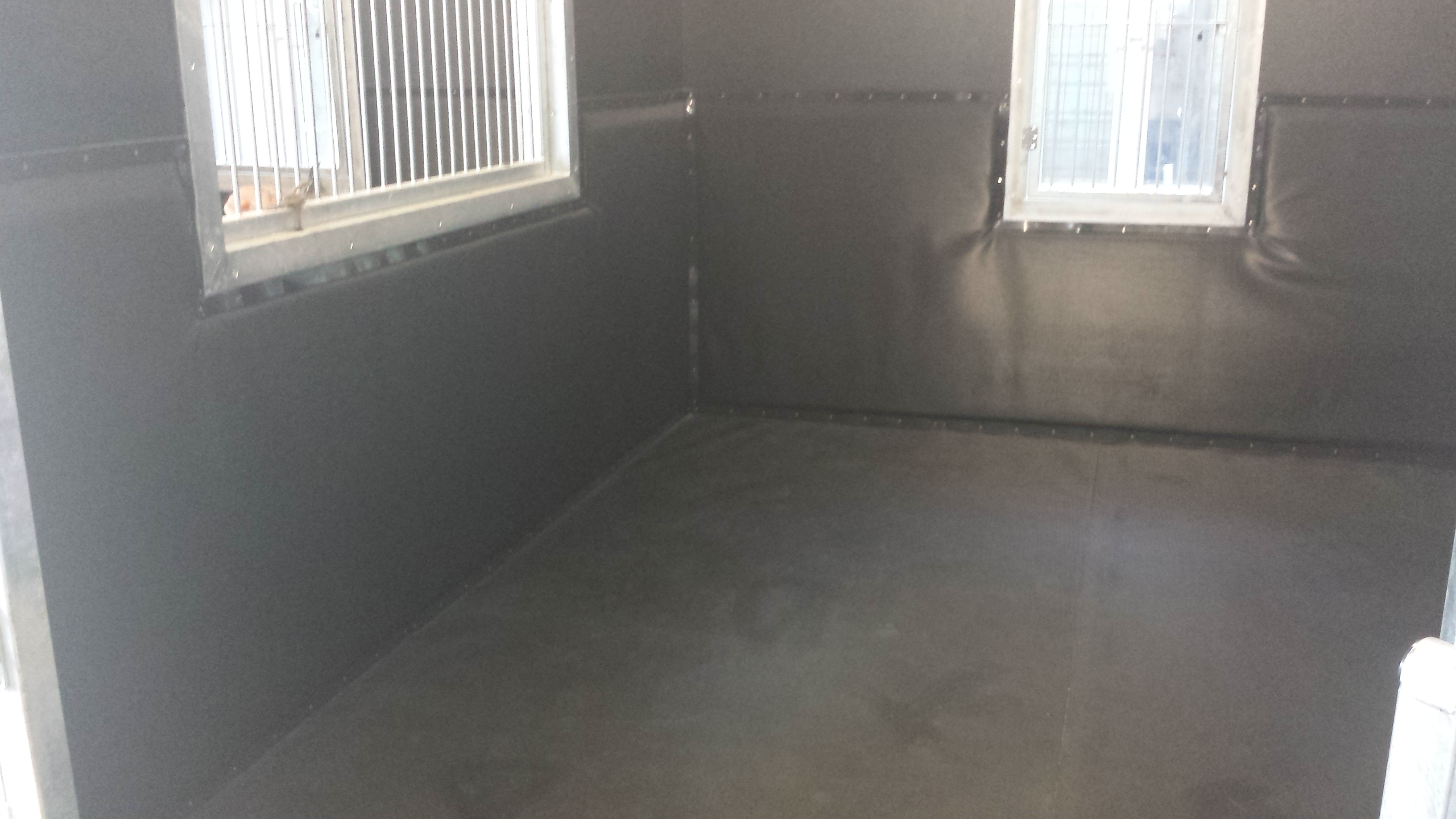
Many of our customers purchase out SuperStall system for broodmare stalls. It is very easy to sanitize and clean, and provides a comforting area for her to give birth in. They’ve even used it to go up the walls of the stall! Our stalls are all custom made for your exact stall size, so if you decide to create stalls that are partitioned, where the partition can be moved or if you do one large broodmare stall, we can make the stall for you!
How do you have your broodmare stall set up?
Tags: broodmare, Broodmare Stall, Foal, Foaling season, Horse Barn, Horse Stall
Posted in Bedding, Foal, Foaling season, Horse Comfort, Stall mats, SuperStall | Leave a Comment »
February 1, 2016
Have ever tried to run on the beach? Not on the wet sand near the water, but in the dry,  deeper sand? You have to struggle just to walk through it; running is even harder! Horses struggle just as much through deep sand. Having deep sand in your horse arena can be potentially dangerous for your horse.
Sand is the most popular footing and is relatively inexpensive. The issue is that you want it deep enough to give your horse traction and provide cushion, but you don’t want it to be so deep to the point where your horse is struggling through it. Sand should only be about two inches deep in your arena. If you are practicing reining, or something else along those lines, you may want it a little bit deeper but not by much. There should not be one-inch deep horse prints in the footing after riding, and the sand should never cover the hoof while standing in the arena.
Deep sand in your arena can lead to various injuries, but almost all of these injuries have to do with the tendons and muscles in your horse’s legs. They can develop wind puffs, or fluid filled swellings, which are almost always chronic, strains and sprains in the legs, which can consist of either just a strain or a complete rupture of a tendon, and lastly a pulled shoulder or hindquarter. Pay close attention to your horse and their actions. If he seems to be sweating more or seems to be working harder, he could possibly have a strained muscle in his legs.
Instead of having to worry about if your deep sand in your arena is going to injure your horse, put one of our dust-free footings in your arena. The fiber in our footings creates a web-like surface allowing for your horse to spring off the surface and not sink into the footing. The lattice-like footing also eliminates tracking in your arenas so you will never see those deep horse footprints in your sand again!
Tags: dust free, Equestrian, Horse Arena, IGK Equestrian, Sand arena, sand horse arena
Posted in Arena Construction, Arena footing, Arena Maintenance, Sand arena | Leave a Comment »
February 1, 2016
Researching horse arenas is your very first step in building one. And then do more research; and then even more. I always suggest looking at forums, such as Chronofhorse.com and seeing what problems others are having with their arenas, and see what they did wrong or how they fixed it. It’s important to be aware of potential issues if the arena is not installed correctly from the beginning.
One major problem I always see on forums is that horses are “punching” through the footing to the base. Most of the time when this occurs, it is from an incorrect installation of a base. A base for your arena should consist of compacted subsoil, then 3-4 inches of large aggregate stone, followed by a geotextile fabric, and then 3-4 inches of compacted limestone with your footing on top. Clay should absolutely not be used as a base material. Your base will take a beating from riding on top of the footing. If you use clay as your base, it will eventually break down from the beating and from constant moisture. When the clay breaks down, you will have uneven spots in your arena where the clay has collapsed, and dust from the smaller particles.

A second issue that I see a lot in forums is standing water in your outdoor arena. This can be caused from a few things. Your base needs to be slightly crowned so that water moves to the outside of your arena. On the outside of your arena, buried about six inches deep should be perforated drains that run the perimeter of your arena. These drains will carry water away from your arena so that your arena does not hold water. It is very important to make sure your outdoor arena has drainage, even if the arena is located in a higher section of your property.
Lastly, I see a lot of issues with dust. Everyone has different ways to fight dust in their arena, whether it be watering the arena daily, adding different kinds of salts, or trying different sands. I’ve seen everything from pond sand, to river sand, to pool sand; but no matter what type of sand if it is not coated, you’re going to have dust. Our dust-free arena footings are all 100% dust-free. Our footings consist of silica sand, different additives based on what type of footing you choose such as fiber and rubber granules, and then both the sand and additives are coated in wax. The wax acts as a binder to hold all of the products together, and also coats the sand so that you will never have any dust! Choosing a footing that is dust-free is much more cost effective than fighting dust, year after year. Add one of our dust-free footings to your arena, and enjoy it for years to come!
Did you do research before you built your arena?
Tags: Arena Construction, Horse Arena, horse arena construction, Outdoor Arena, research
Posted in Arena Construction, Arena footing, Arena Maintenance, Dust Free Footing, Outdoor arena | 1 Comment »
February 1, 2016
I don’t know about you but I am definitely missing riding in the outdoor arena. Riding in the indoor of course is nice, but there is nothing like riding outside in the fresh air with a great view. Finding the correct footing for an outdoor arena can be tough at times; here are a few things to look for when choosing footing for your outdoor arena.
- Your arena should be able to be wet and still ride on; it should not become slippery and or hard after getting wet. There are a few footing options that can become very slippery even with the slightest amount of moisture such as dew on your arena. Slippery arenas can be catastrophic for your horse. (check out this blog I wrote on slippery footing!) It should also not be rock hard after rain. Some types of sand will become almost like concrete after rain, not something you want to have to spend time on trying to break up.
- The footing should not break down outside. When withstanding the elements, some footings break down very fast and have to be replenished often; costing you lots of time and money. Any organic matter that is in your footing will break down in a rainy climate.
- If you have additives in your footing, they have to be held in the footing. For example: if you have fiber or smaller rubber additives, they should not be blowing away with the wind. You don’t want to watch thousands of dollars just drift out of your arena and across your property.
Finding the perfect recipe of footing for an outdoor arena can be tough at times, but look no further than our dust-free footing products. All of our dust-free footings can be used in outdoor arenas. All of our footings are composed of pure silica sand that is sub-angular, giving horses the perfect amount of grip, while not compacting. The additives in the footing are bound to the sand with our wax component. The wax in the footing not only binds the elements to hold the footing together, but it also is what makes our footing dust-free, you no longer have to water your outdoor arena! The wax component allows for water to wick off of the surface, so that you can ride immediately after a rainstorm.
Don’t spend more time fighting with footing in your outdoor arena. Switch to our synthetic dust-free footing and no longer worry about your footing becoming hard, slippery, loosing your additives, or replenishing your arena constantly!
Do you like riding in an indoor or outdoor more?
Tags: footing, horse footing, Outdoor Arena, outdoor horse arena
Posted in Arena footing, Dust Free Footing, Horse Arena, Horse Arena Footing, Horse Comfort, Outdoor arena | Leave a Comment »
February 1, 2016
Around this time of the year, customers are planning their spring barn projects causing our number of inquiries to rise; along with how many questions we get about our footings. Recently, we’ve noticed a few popular questions come up, with the most popular being: “what do I do with my old footing? Can yours be mixed in?”
Our footing is manufactured in a specific mixing facility in Upstate NY. This allows for us to control all aspects of the environment that the mixture is being created in. If we did not so closely monitor the manufacturing process, the footing could end up with particles in the footing that create dust, or an incorrect type of sand in the footing, which could cause the footing to compact. We have kept the same formula for our footing since we started in 2004, and do not want to alter it in anyway.
With our footing being manufactured in such a specific way, there is not an alternate approach for making our footing such our footing to be mixed in with what is currently in your arena. If you have a current arena with footing, it will have to be completely removed in order to install our products. The most common approach for removing footing is to hire a contractor that has worked with horse arenas before. It is important to check references before the contractor starts work. The footing has to be removed in such a way that it does not damage the base. More than likely, a bit of base work will have to be done before adding our dust-free footing.
We love all of the questions that we get asked and if you have any questions I may have no answered in our blogs, let me know!
Tags: Equestrian, Horse Arena, horse arena construction, Horses, Outdoor Arena, outdoor horse arena
Posted in Arena Construction, Arena footing, Arena Maintenance, Dust Free Footing, Horse Arena, Horse Arena Footing, Horse Comfort, Outdoor arena | Leave a Comment »
January 4, 2016
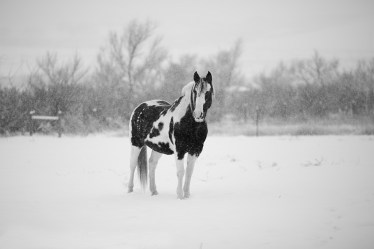 Winter is not my favorite season when it comes to riding my horse. If you’re like me, you get easily bored in your indoor arena. When asking an equestrian what their favorite season is, you’ll most likely hear Summer, or Spring, or Fall. I don’t think I’ve ever heard an equestrian say “I just love riding in the winter!” Shows and races start back up in the spring and continue into summer and fall. Sure the winter is beautiful to trail ride through woods that have a light snowfall, but once the snow hits a certain depth, we all are pushed into indoor arenas to ride. Indoor arenas can make both you and your horse feel confined. Riding a few times clockwise around the arena at a walk, trot, canter; then a few laps counterclockwise with the same routine. Not only are you bored at this point, but so is your horse. I pulled together a few different options for keeping both you and your horse from becoming bored in your indoor arena.
Start off by changing up how you ride around in the arena. Instead of doing the usual, riding on the rail around in a circle, try some different patterns. Work on riding in a big figure 8 in your arena. Place a cone directly in the center so that you have a visual of where your 8 should cross over. Be sure to pay attention to how you are bending him around the circle, and try to keep the circles as equal as you can. Another idea is to ride in a diamond shape. At each corner, create a swift turn to travel up the other side of the diamond. Be careful not to rush your horse. Start with a walk first, and then trot the diamond. One more variance to try is to be about ten
feet off of the rail towards the center of your indoor and ride in the same motion as you would if you were on the rail, a rounded rectangle. At the long sides, allow your horse to extend, but then collect him as you come into the corners and keep him collected or slower on the shorter ends of the rectangle. This will help you increase and decrease speed smoothly.
If you feel very motivated you can use various obstacles in your arena. Some obvious examples are setting up smaller jumps, or poles on the ground for you to work your horse over. But if you have long winters like we do in upstate NY, you have time to get creative. One example I read about is to set up various barrels around your arena and place a cone on a few of them. Work on walking to the barrel, stopping, picking up the cone and then walk to a second barrel and place the cone down. As you progress in this challenge, don’t stop at the barrel to grab the cone, make your horse move right past it while you grab the cone. A few other options are placing tarps on the ground and working with your horse to calmly walk over the tarp, even though it may make scary crinkling noises. I have also seen others use hanging noodles that you walk your horse through through. Walking through these various obstacles will build your horse’s confidence and trust in their riders. It is hoped that the horse will react calmly if they were to encounter something like these obstacles in real life situations.
Riding in an indoor arena can also be a hassle because of trying to deal with dust. Focus more on training your horse through various obstacles or different patterns than worrying about dust by switching to one of our dust-free footings. You will never have to water your arena again!
How do you stop from getting bored in the winter?
Tags: Equestrian, Horse Barn, Horse Riding, Indoor Arena, Winter
Posted in Dust, Dust Free Footing, IGK Equestrian, Indoor Arena | Leave a Comment »
January 4, 2016
We all have big pet peeves. And when it comes to horses, we are no different. I’m sure everyone has at least one thing at your horse barn that either a horse, or another person does that can just drive you insane. We all have at least one horse barn pet peeve!
I always follow a few different blogs about horses on the internet, and I recently saw one with a lot of comments from many horse people, voicing their opinions on what their biggest pet peeves at the barn are. Some things that other people do that can get on our nerves are:
- Other boarders “borrowing” supplies from people, and then those supplies not getting put back where they were to begin with.
- Halters getting left on one crosstie, and then dropped to the floor.
- Leaving manure in wash stalls.

- A boarder feeding treats to other boarder’s horses without permission.
A few things that our horses do that drive us nuts are:
- Pooping as soon as you finish mucking and bedding the stall. The worst!
- Pawing when they want to be fed or for attention.
- Rubbing their teeth together for attention, or towards another horse.
- Urinating when on cross ties.
- Pooping in their water bucket.
Some of these things can make me grit my teeth and get my blood boiling. I think my biggest pet peeve of all time is when a horse poops while someone is riding in the indoor, and instead of picking up the manure after they are done riding, they leave it there. When you leave manure in your arena, you’re adding organic compounds to your footing. Dust is created from your sand particles breaking down, and the different organic matter in your footing also breaking down. Leaving manure, or hay, or bedding in your arena will make your battle with dust, that much harder. No matter what footing you have in your arena, you should always pick up your manure!
Do you have any horse barn pet peeves?
Tags: Horse Ban Pet Peeves, Horse Barn, Indoor Arena, Outdoor Arena, Pet Peeves
Posted in Dust, Indoor Arena | Leave a Comment »
December 1, 2015
Here in Upstate NY, our winters are brutal. Being located in the Finger Lakes Region of New York, we can get buried pretty quickly by lake effect snow. In the winter of 2015, we had 125.3” of total snowfall! As we start to batten down the hatches, or close the stall windows of our barn to keep the nasty cold out, you also should start thinking about how we are going to winterize your horse barn. Here are a few tips!
- Stock up on supplies you may need in the winter, such as hay or bedding. Some barns I know cut and bale their own hay, but if you purchase hay from someone else, stock up on it at the end of summer when prices will be the lowest. If you wait until the first of the year when you are running out of hay, prices can almost double. Be sure your hay is stored in a well ventilated area.
- Take the extra time you’ll be spending in the barn to do a good dusting. Cobwebs in a barn can be a fire hazard and are not sightly. Use a broom covered with a cloth and go through your barn with a good cleaning. The cobwebs and dust that has collected over the summer aren’t good for your horses’ health or yours!
- Walk around your barn and see where there may need to be repairs. Waiting until there are sub-zero temperatures to fix a gate is definitely not an ideal situation. Complete all of the repairs that you may see. Also be sure to know where everything is located around the outside of your barn. If you live in a climate like we do, snow can accumulate very fast and you may lose sight or forget where something was placed outside of your barn. Draw a map of your facility if you have to, so that you know where everything is located outside once the snow covers it up. Be sure that gates are all still accessible in the snow.
- Although our first instinct is to close everything in the barn up for the winter to keep heat in, you still need to keep your barn well ventilated. During the winter, your horses are probably going to be spending 50 percent or more of their time in their stall. Mucking your stall daily, and keeping good ventilation throughout your barn will keep your horses breathing healthy air and keeping them happy.
- Make sure you have enough space for your winter manure. A 1,000 pound horse can generate 50 pounds of manure each day. Even a barn with a few horses can quickly create a mountain of manure. Before winter comes, create an adequate place to store the manure for a few months, or construct a plan on how to remove the manure even with snow on the ground and how you’re going to dispose of it.

Winterize your Horse Barn
The biggest issues that you may face in the barn in the cold winter months are spending additional time mucking out manure from the horses being inside more, and trying to keep the dust in your indoor arena down, without freezing your footing. Both of these potential problems can be solved by installing our SuperStall Mattress System and our Dust-Free Arena Footing. Our one piece, wall-to-wall mattress system will eliminate deep bedding and cut down on time it takes to muck out your stalls. By installing our dust free footings in your indoor arena, you no longer have to worry about watering your footing in the winter and then the footing freezing from the moisture. Winters can be hard in a horse barn, but installing our products in your barn and taking some steps to winterize your horse barn
can make it easier!
Tags: Barn in Winter, Horse Barn, Horse Stall, Horses, Winter, Winterize your Barn
Posted in Arena footing, Bedding, Horse Arena, Horse Arena Footing, Horse Comfort, IGK Equestrian, Stall Hygiene, SuperStall | Leave a Comment »
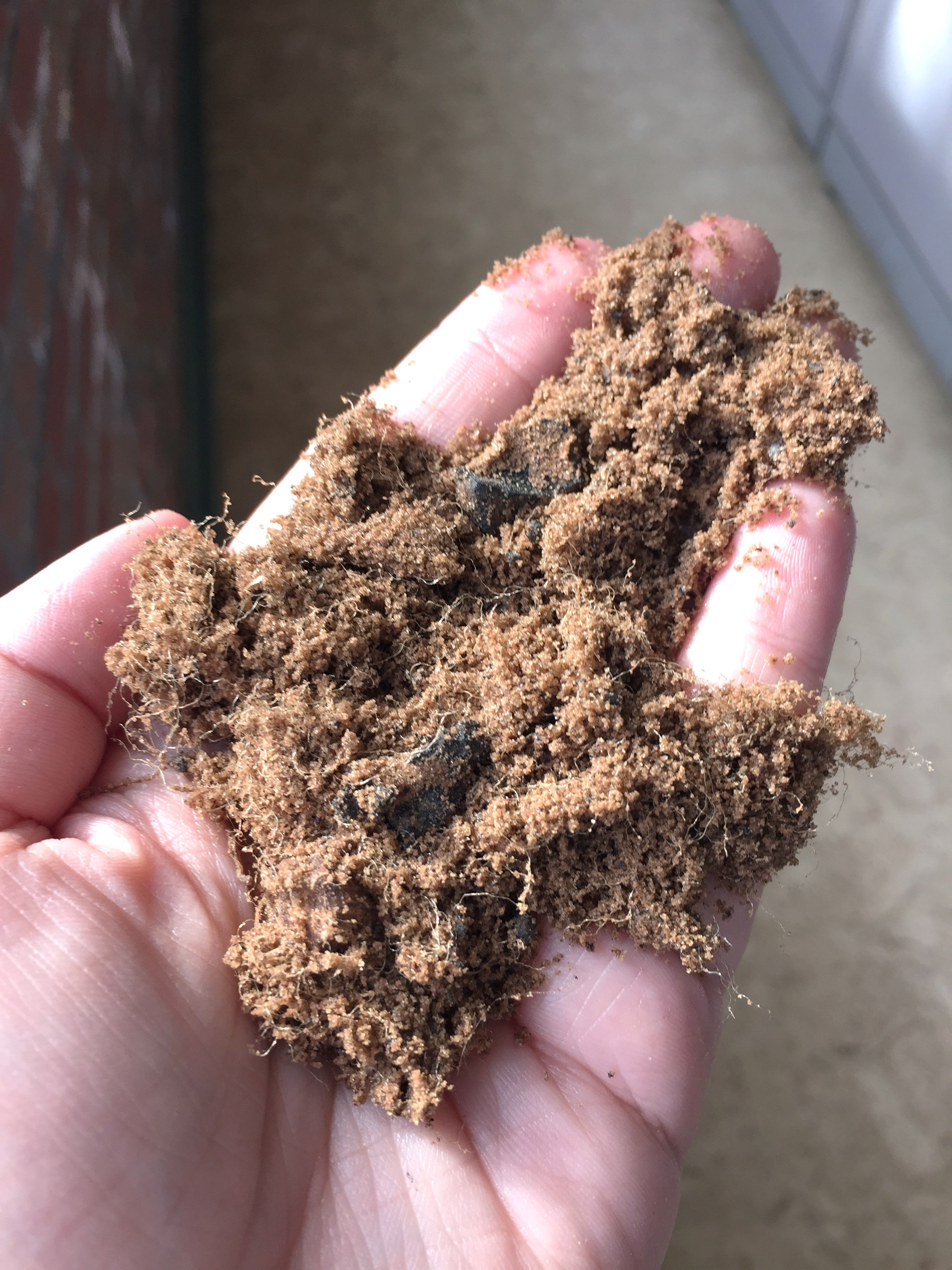 arena footing last?” We talked about how the sand particle plays a huge role in the longevity of your arena footing. Today we’re going to talk about the different additives you can have in your footing and how those play into the longevity of the footing.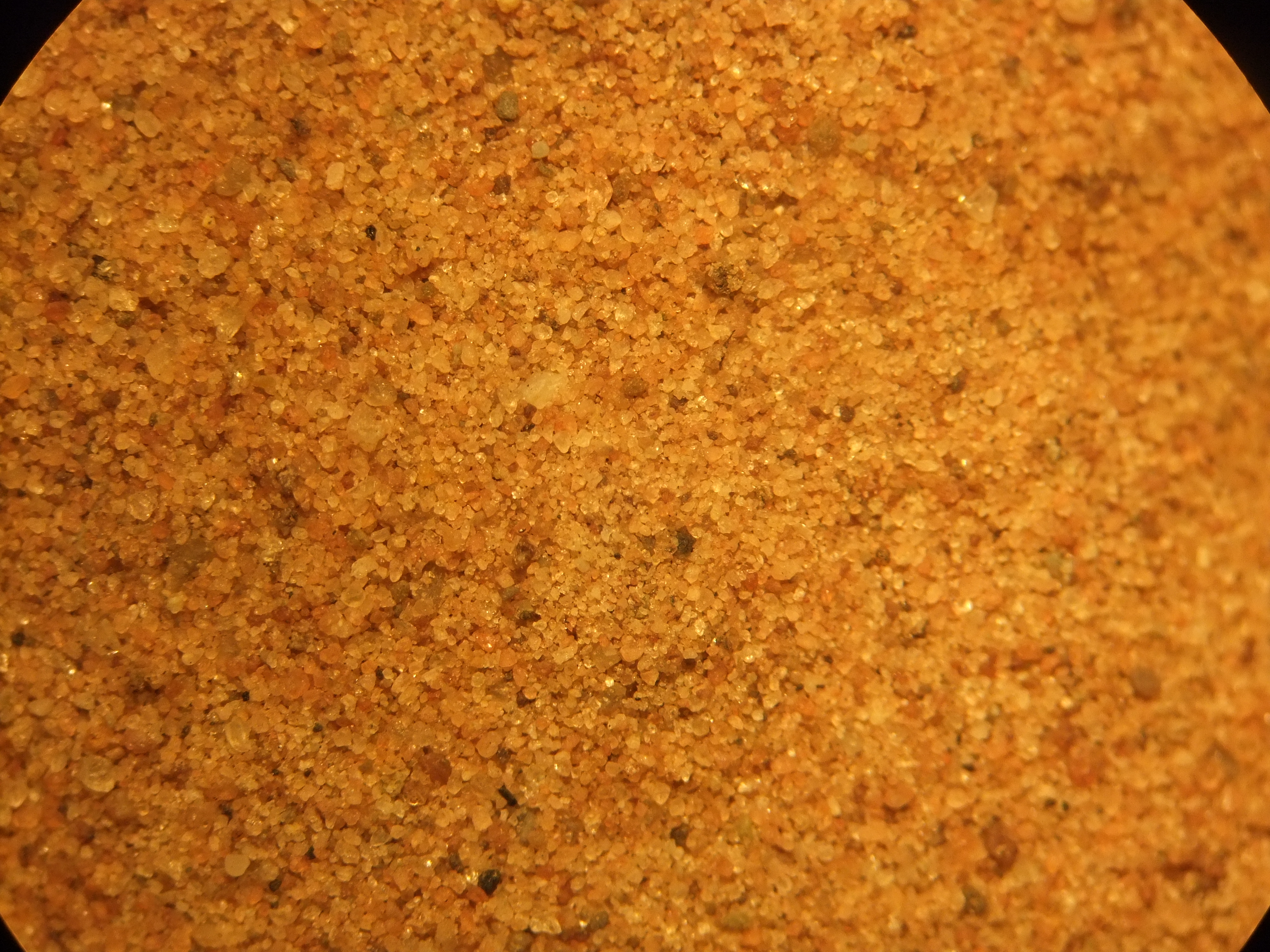

 Carolyn's Footing and Bedding Blog